
Last updated November 24, 2026
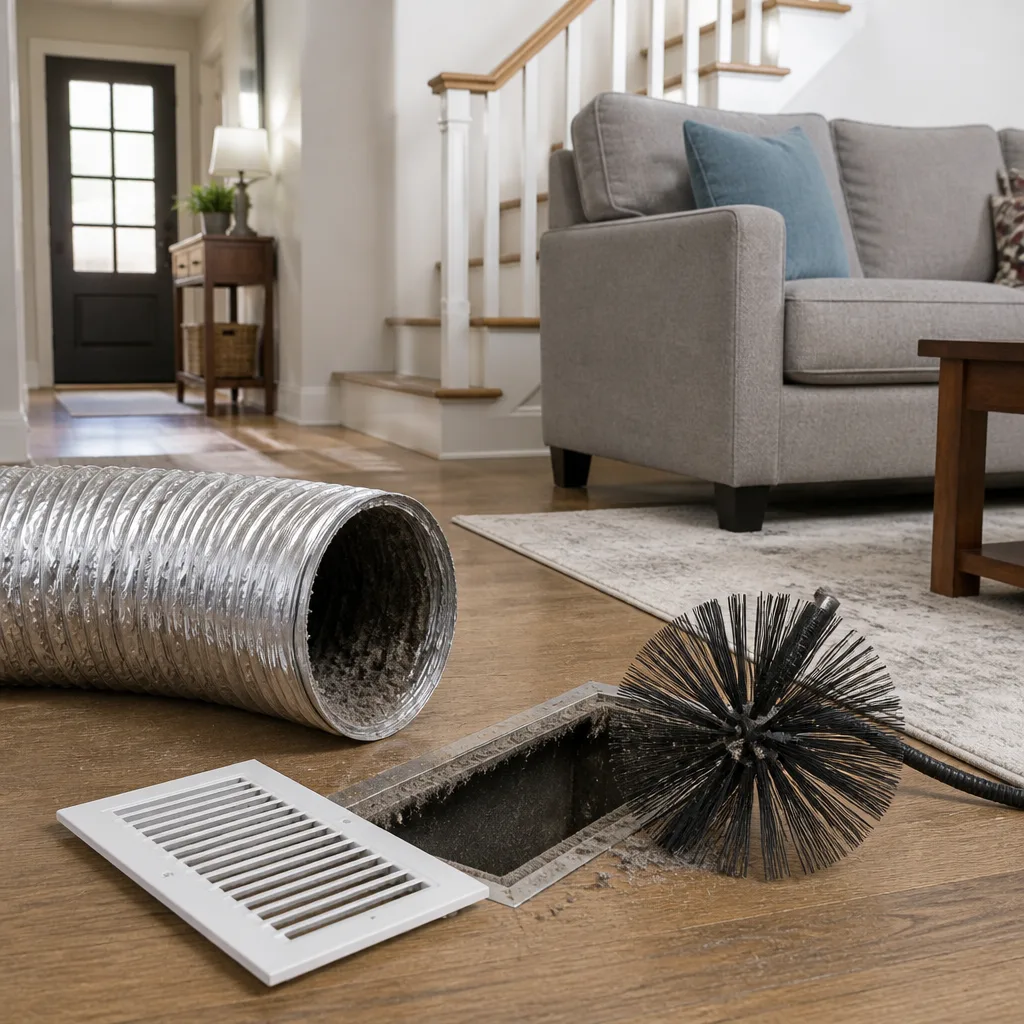 Whole-home duct cleaning
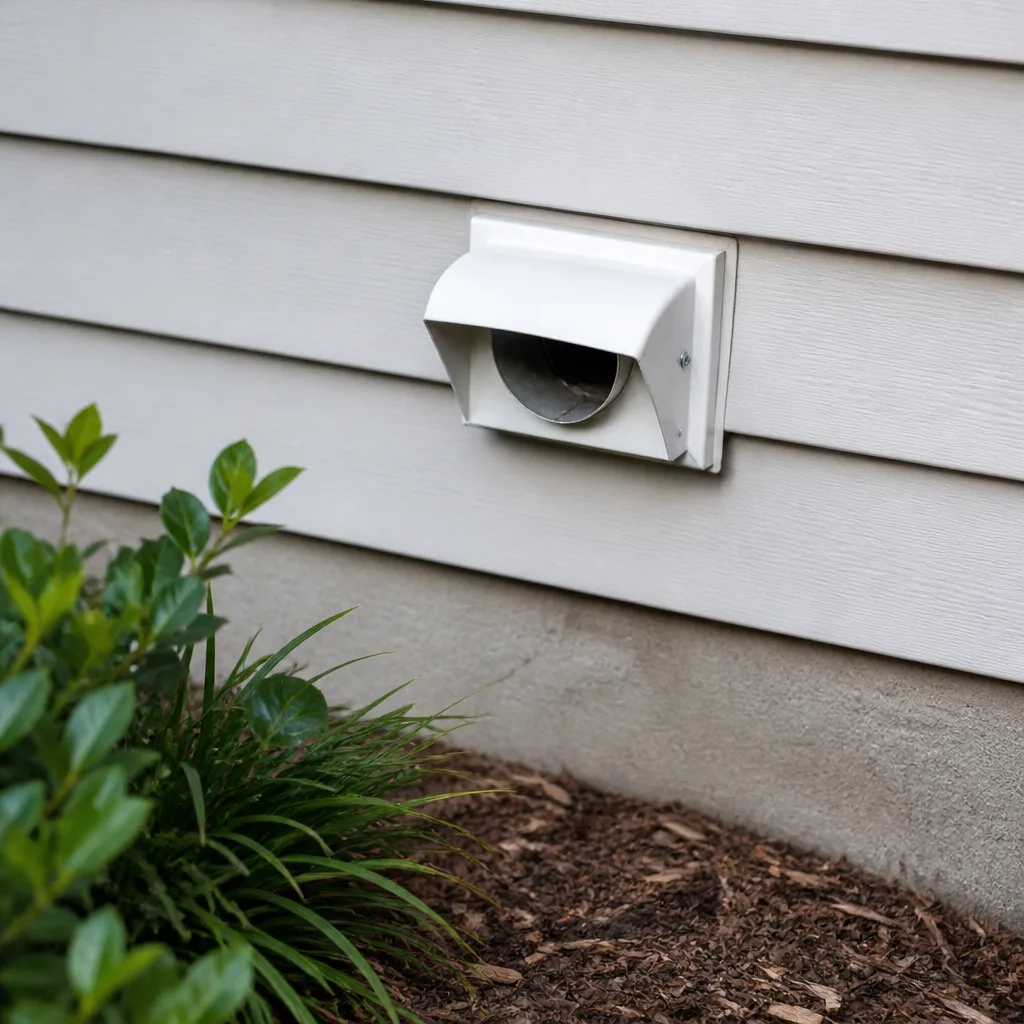 Dryer vent cleaning
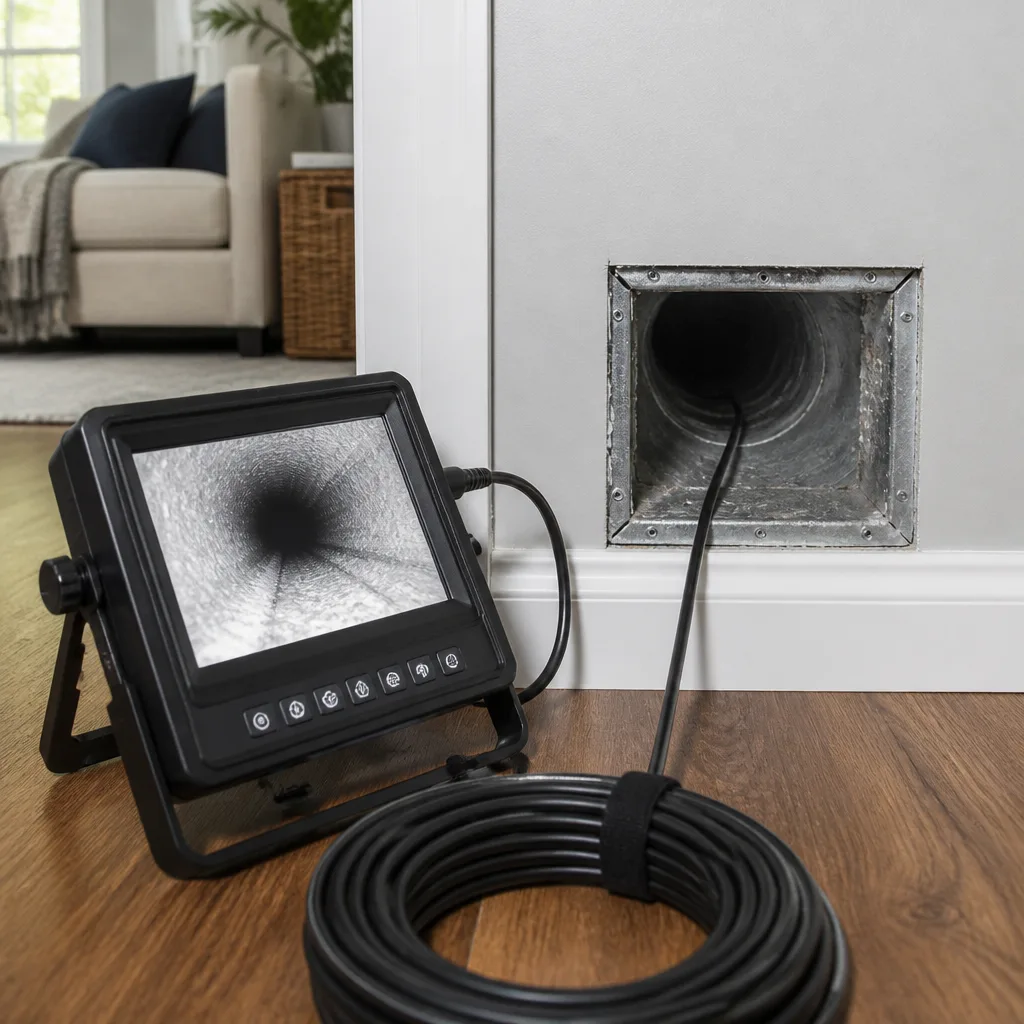 Camera inspection
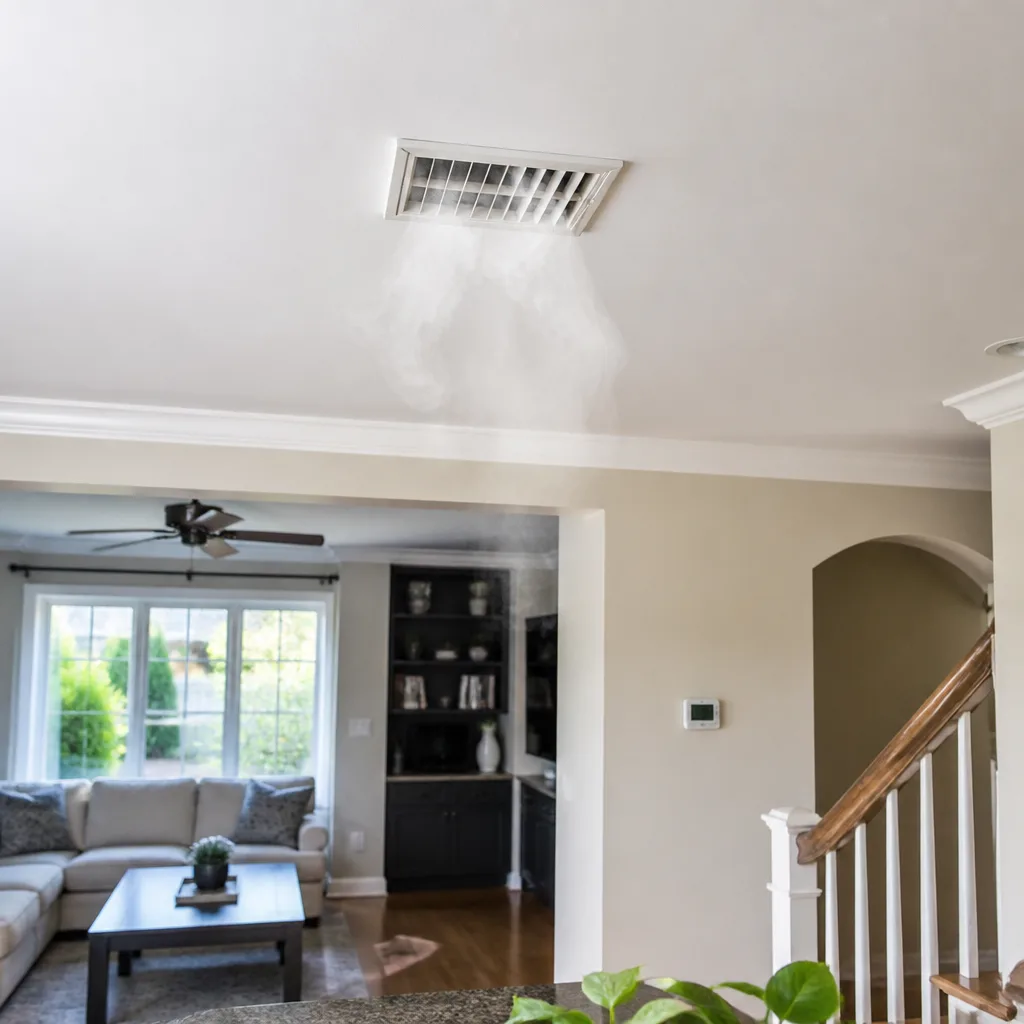 Sanitizing & deodorizing
Whole-system duct and dryer vent check with before-and-after photos - you see exactly what came out of your vents
That "$99 whole-house special" is a bait ad - the real number appears once they are in your hallway, or the "clean" is a shop-vac at the register. We photograph the inside of your ducts before and after instead.
Air Duct Cleaning Emergency Preparedness Guide for Laguna Hills Homes
Most homeowners think of their duct system as a passive set of tubes that carries conditioned air and nothing else. That assumption costs people in this canyon-and-ridge town more than they realize. Laguna Hills sits inside a documented wildfire interface zone, and the ducts in a typical home here pull air from return grilles, attic chases, and garage-adjacent spaces that are never really sealed. When smoke rolls in, those same pathways carry fine particulate into the living space long after the sky clears. The duct system is the part of the house nobody prepares and everybody uses. This guide covers how smoke gets in, how to prepare before fire season, how to handle the aftermath, and what to document if you file a claim.
Quick Answer
A duct system in Laguna Hills needs three things to be fire-ready: sealed return leaks and filter bypass gaps that let smoke bypass the filter, filtration rated MERV-13 or higher, and a documented post-event inspection before the system runs again. Soot and smoke particulate embed in flex duct liner and re-release into the home on every heating cycle, so the sequence of assessment, HEPA extraction, and sanitizing matters more than speed.
Styles & brands we work with
- Whole-home duct cleaning
- Dryer vent cleaning
- Camera inspection
- Sanitizing & deodorizing
Table of Contents
- How Wildfire Smoke Actually Enters Your Duct System
- Pre-Fire-Season Preparation: The Four Things to Do
- Post-Event Remediation Sequence, Step by Step
- When Rain Follows Fire: Water Intrusion in Attic and Crawl Space Ducts
- The Emergency Documentation Checklist for Insurance Claims
- Why Routine Cleaning Is Emergency Preparedness
- Sealing and Repair: Closing the Gaps Smoke Uses
- Sanitizing After an Event: What It Does and Doesn’t Do
How Wildfire Smoke Actually Enters Your Duct System
Smoke doesn’t need a broken duct to get inside. It needs a pressure difference, and your HVAC system creates one every time the blower runs. The house pulls air from wherever it can, and the return side is where the leaks live.
There are three mechanical pathways most homeowners never hear about.
1. Return Duct Leaks
Return ducts often run through attic spaces, wall chases, and garage ceilings, and the joints in that ductwork get less attention than the supply side because a leak on the return is invisible. It doesn’t blow air into the room, it sucks air in. During a smoke event, a return leak in the attic pulls outdoor smoke straight into the air handler, downstream of any filter guarding the return grille. In our experience, older flex duct in Laguna Hills attics develops separated joints and torn outer jackets over time from heat cycling alone, no fire required.
2. Filter Bypass Gaps
A filter is only as good as its frame. If there’s a gap around the filter slot, the cabinet, or the filter door, smoke takes the path of least resistance and goes around the filter entirely. A MERV-13 filter with a half-inch gap performs about as well as a loose piece of cardboard. We’ve pulled filters that were doing almost nothing because the rack hadn’t been sealed to the cabinet.
3. Economizer Dampers Left Partially Open
Systems with an outdoor air economizer have a damper that opens to bring in outside air for free cooling. If that damper sticks open, which it does more often than most people think, the system draws outdoor air around the clock, smoke included. A damper that doesn’t fully close is a direct line from outside into the air stream.
The pattern is the same in every case. Smoke enters the system, coats the duct interior and the air handler, and waits. Every time the heat comes on, some of it lifts off and circulates again.
Pre-Fire-Season Preparation: The Four Things to Do
Preparing a duct system for fire season is a half-day of work and a phone call, done in the spring before the first red flag warning. The goal is simple: reduce the ways smoke can enter, strengthen the filter that stands in the way, and give yourself a fast way to shut the system down when the sky turns orange.
- Seal known return duct leaks. A technician runs a pressure test or a visual inspection of the accessible return runs and seals separated joints, torn jacket, and open boots with mastic or foil-backed tape rated for ductwork. Gaps that pull attic air should be sealed before anything else.
- Seal the filter rack and close bypass gaps. The filter has to sit in a sealed slot. Ask for the frame to be taped or gasketed to the cabinet, and confirm there’s no visible daylight around the filter.
- Upgrade filtration to MERV-13 or higher. This is a real change, and it has a caveat. High-MERV filters are restrictive, and a system not designed for one can lose airflow and strain the blower. Confirm the system can handle it before swapping. We work with Honeywell and Aprilaire filtration components and can tell you what a given cabinet will take.
- Verify you can shut the system down quickly. Find the thermostat’s system-off setting and, better, the disconnect or breaker for the air handler. During a heavy smoke event, shutting the system off is the single most protective step a homeowner can take, and you don’t want to be hunting for the breaker at 2am with the house filling.
One more item worth the effort: close the outdoor air damper and confirm it actually seats. A damper that doesn’t seal is a hole in the house’s smoke defense.
Post-Event Remediation Sequence, Step by Step
After a fire event, the instinct is to clean everything as fast as possible. The better approach is deliberate sequence. The first rule is a hard one: lock the system out until it’s been assessed. Running the blower through a sooted duct system pushes deposited particulate into every room and drives it deeper into the liner. Turn the system off, keep it off, and start with assessment.
- System lockout. Switch off at the thermostat and the disconnect. Do not run the fan to “clear the air.” That does the opposite.
- Camera inspection of the return ducts. A borescope inspection shows soot deposit depth along the return runs, which are typically the most heavily loaded. A visual check at the grille tells you almost nothing about what’s ten feet inside.
- Determine clean vs. replace. Light surface deposit on rigid metal duct can often be cleaned. Soot that has penetrated the inner surface of flex duct liner usually can’t be fully removed, and liner replacement is the honest answer. A remediation report should say which is which and why.
- HEPA extraction. Smoke particulate is fine and it goes airborne the moment you agitate it. We use Abatement Technologies air filtration units and Nikro negative-air equipment to hold the work area under negative pressure and capture what comes loose rather than redistributing it. Rotobrush rotary brush systems handle the duct interior itself, contact cleaning rather than a pass with a shop vac.
- Clean the air handler and coil. The blower wheel and evaporator coil collect smoke film, and no amount of duct cleaning fixes a contaminated coil. This falls under HVAC cleaning and belongs in the same job.
- Sanitize and verify. Apply a post-cleaning sanitizing treatment to address biological contaminants left behind, then re-inspect on camera and document the result.
Only after that sequence does the system go back into service.
When Rain Follows Fire: Water Intrusion in Attic and Crawl Space Ducts
Fire season and rain season bookend each other here, and the canyon areas of Laguna Hills see heavy rain events that find their way into attics and crawl spaces. Ductwork that gets wet is a different emergency from smoke, and it’s a more urgent one. Wet flex duct liner is a mold substrate, and mold can begin colonizing damp insulation quickly in a warm attic.
What to look for after a heavy rain:
- Staining or sagging on the attic ceiling below roof penetrations
- Duct runs that hang loose or show water marks on the outer jacket
- A musty smell that appears when the system runs
- Visible condensation or standing water near the air handler platform
The response sequence is dry first, then assess, then treat. If a duct run got wet, the system should stay off until it’s dry, and any liner with visible mold growth should be replaced rather than wiped. For ductwork that’s wet but not yet colonized, drying and an antimicrobial treatment can be enough. The Guardsman product line we use is applied after cleaning to address biological contaminants, never as a substitute for getting the material dry.
This is where a full-system provider earns its keep. Water damage to ductwork sits at the intersection of cleaning, drying, repair, and sanitizing, and patching together separate specialists usually means the job gets done in pieces and nobody owns the whole result.
The Emergency Documentation Checklist for Insurance Claims
Insurance claims for smoke and water damage to a duct system hinge on documentation. Photos taken after the emergency crews leave are worth far less than photos taken before anything is touched. Here’s what to capture, and in what order.
- Photograph the exterior and the smoke line. Wide shots of the property and any visible ash or soot on surfaces near the HVAC intake.
- Photograph every return and supply grille. Grille faces, filter condition, and anything visible inside the register boot.
- Photograph the air handler and filter. The filter itself, the filter slot, and the blower compartment if accessible.
- Photograph any water intrusion. Staining, sagging, or water marks on duct runs and attic structure.
- Keep the damaged filter. Don’t discard it. It’s evidence of what the system was drawing in.
- Get the condition documented on camera by a technician. An interior inspection shows deposit depth along the return runs, not just at the grille.
What a Remediation Report Should Contain
- Date, address, and the scope of work performed
- Pre-cleaning photographs of duct interiors at documented locations
- Post-cleaning photographs at the same locations, for direct comparison
- Equipment used, by name and function
- Findings on liner condition and any recommended replacement
- Sanitizing treatment applied and the product line used
- A clear statement of what was not cleaned and why
A report with before-and-after photos at matched locations is the difference between a claim that gets approved and one that gets argued. We photograph what’s inside before and after on every job, which makes that report straightforward to produce.
Why Routine Cleaning Is Emergency Preparedness
A duct system already carrying years of dust, pet hair, and construction debris behaves differently in a smoke event than a clean one. The load is higher, the deposits are looser, and more of what lands in the ducts comes back out into the room. Routine Laguna Hills Air Duct Cleaning isn’t a fire-season task, but it’s the foundation the fire-season work sits on.
How often a system needs cleaning depends on the house, not a calendar. A home with pets, recent remodeling, or a long-neglected return chase will need it sooner than a newer build with sealed ductwork. The honest answer is that condition determines interval, and condition is something you can only know from an inspection. What we can say is that a system with heavy debris load takes longer to remediate after an event and holds contaminants longer.
There’s a second routine item on this list that belongs in any preparedness discussion: the dryer vent. A dryer vent clogged with lint is a fire waiting for a spark, and it’s a dedicated service rather than an afterthought.
A home with clean, sealed ducts and a clean dryer vent simply has less old material waiting to mobilize when the air gets smoky.
Sealing and Repair: Closing the Gaps Smoke Uses
Sealing is the most underrated part of duct work and the most directly relevant to smoke infiltration. Every gap you close is a pathway you remove. It’s also the only part of the work that pays you back year-round, because duct leakage wastes conditioned air in every season, not just fire season.
What sealing typically covers:
- Separated joints at boots and plenums. Mastic or code-rated foil tape, applied properly, not the cheap cloth tape that dries out in a hot attic.
- Torn flex duct outer jacket. A tear in the jacket means the insulation is exposed and the run is pulling unconditioned attic air.
- Filter rack gaps and cabinet seams. Any opening that lets air skip the filter.
- Disconnected and crushed runs. Both reduce flow and both tend to show up as that one cold room that never gets comfortable.
- Attic hatch and chase openings near HVAC equipment. Not ductwork strictly, but part of the pressure boundary.
Repair and sealing happen under one provider along with the cleaning, which matters because you shouldn’t have one crew clean a system and another discover the gaps afterward. One call covers cleaning, repair, sealing, and sanitizing. For systems with damaged liner or crushed runs, an inspection tells you whether repair or replacement is the answer before anyone starts working.
Sanitizing After an Event: What It Does and Doesn’t Do
Cleaning removes debris. Sanitizing addresses what’s left on the surfaces after the debris is gone, and the order matters. Applying a sanitizing product to a dirty duct does nothing useful because the product never reaches the surface. It goes on after cleaning, not instead of it.
Sanitizing targets biological contaminants: mold spores, bacteria, allergens. After a wildfire event, there’s also the question of smoke residue and chemical off-gassing, which sanitizing helps with by way of surface cleaning rather than by masking odors. If the goal is odor control, the answer is removal of the source material, not fragrance. We use Guardsman treatments as part of the air quality and sanitizing service, applied after the system is clean and inspected.
What sanitizing doesn’t do: it doesn’t repair a wet duct, it doesn’t restore a compromised liner, and it doesn’t solve a leak on the return side. Those are separate fixes. Clean ducts are the beginning, not the finish line, and this is where a lot of quick-service operations fall short by skipping the treatment step or, worse, applying it to a dirty system and calling the job complete.
For homeowners managing ongoing air quality rather than a single event, the Honeywell and Aprilaire components we install bridge the gap between cleaning and filtration maintenance going forward. That’s the period after an event that most people forget about.
Common Mistakes to Avoid
- Running the fan to clear smoke from the house. The blower pushes deposited particulate back into every room and drives it deeper into the liner. Turn the system off and leave it off until it’s assessed.
- Trusting the grille as a look inside the duct. The register face is the cleanest part of most systems. The return runs, which set the actual condition, are invisible without a camera.
- Upgrading to a high-MERV filter without checking airflow. A MERV-13 on a system that can’t handle the restriction strains the blower and can freeze a coil. Confirm compatibility first.
- Leaving the filter bypass gap. A high-efficiency filter in a leaky slot is a wasted filter. Seal the rack or the upgrade does little.
- Wiping mold off a wet duct liner and calling it fixed. Colonized liner has to come out. Cleaning the surface of a moldy duct doesn’t solve it.
- Hiring a one-pass vacuum job after a fire event. Smoke particulate needs containment and negative air, not a shop vac. Ask what equipment will be on site before you book.
- Filing a claim without photographs. Documentation taken before anything is touched carries the claim. Photo after the fact and you’ve lost your best evidence.
See the difference
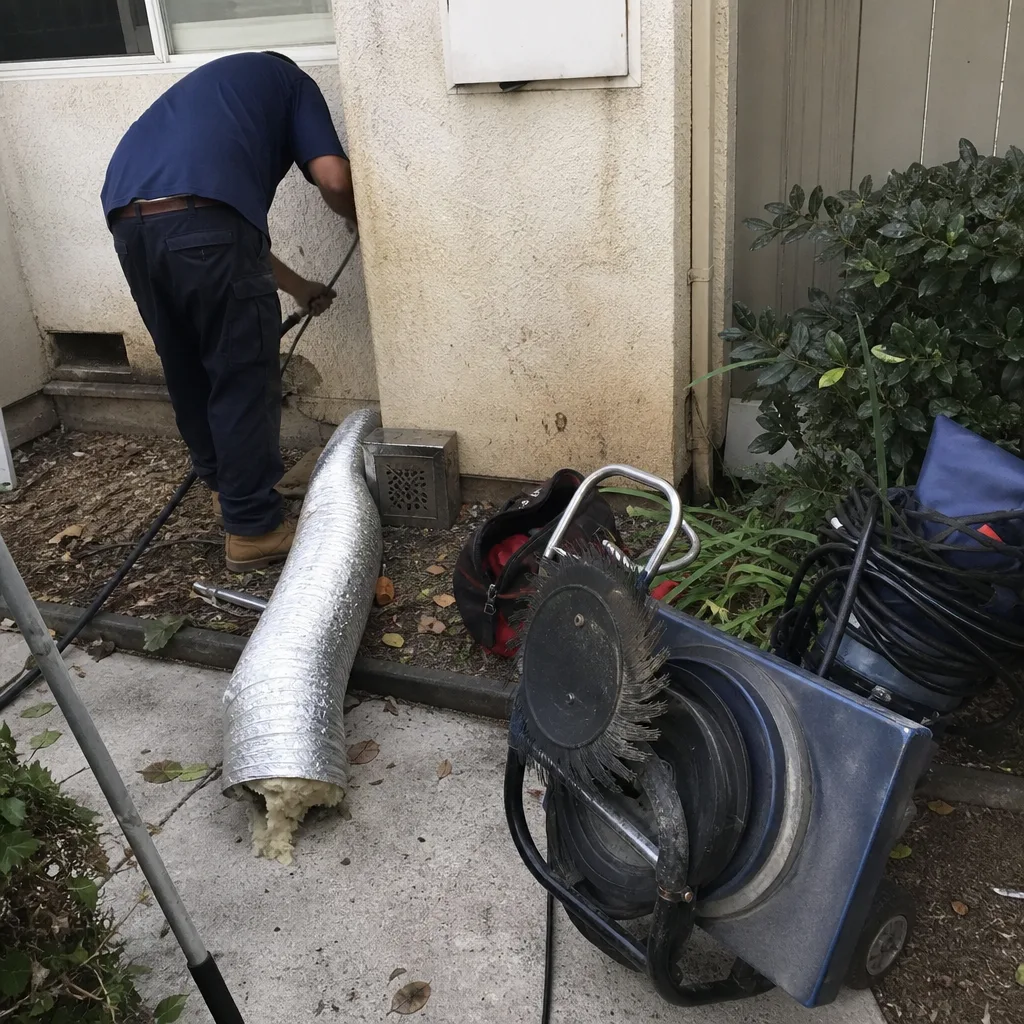 Before
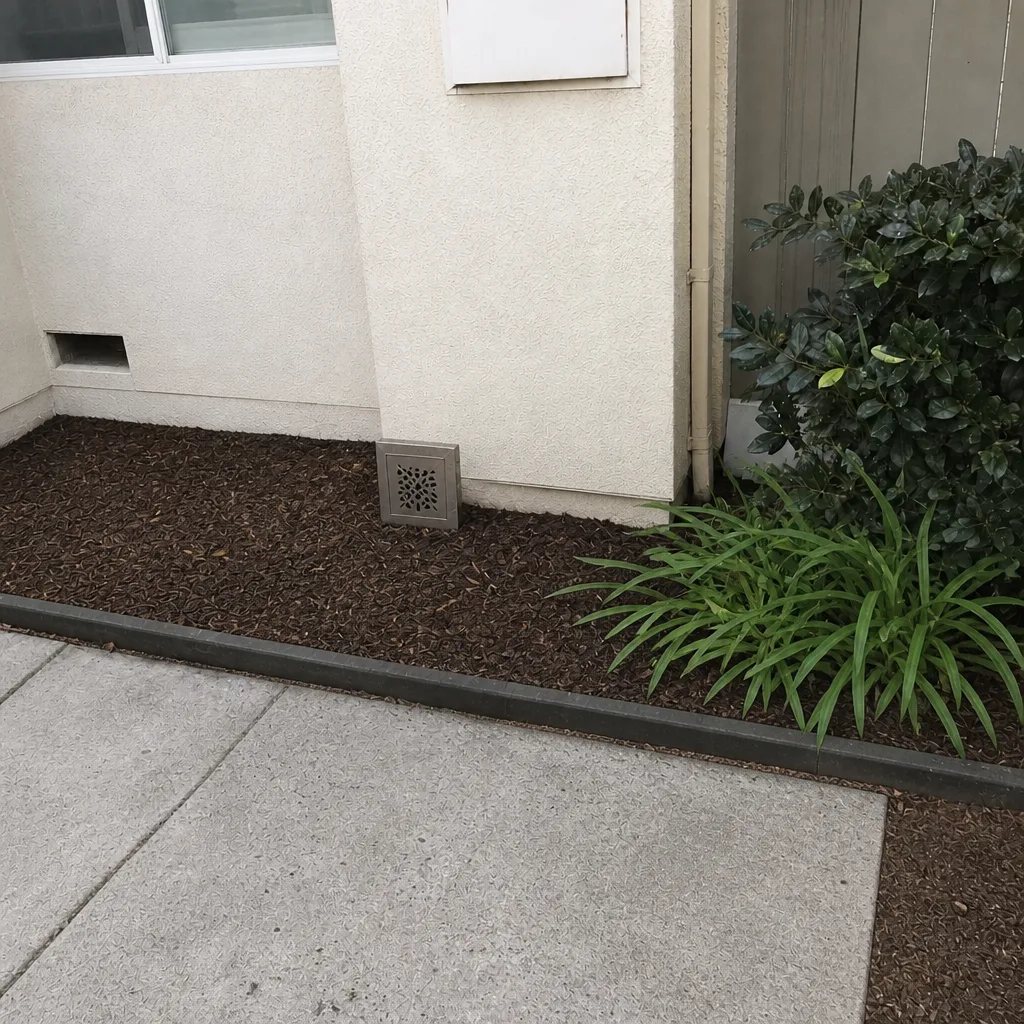 After
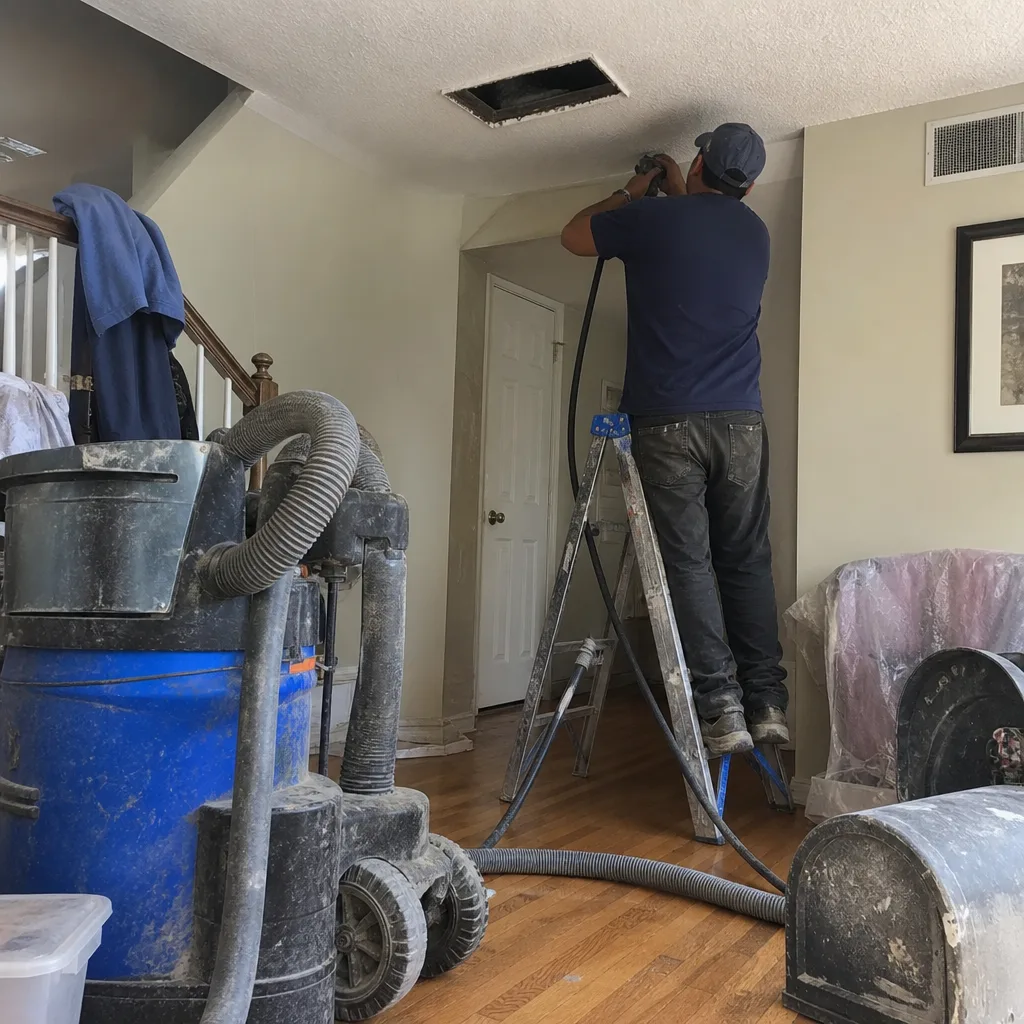 Before
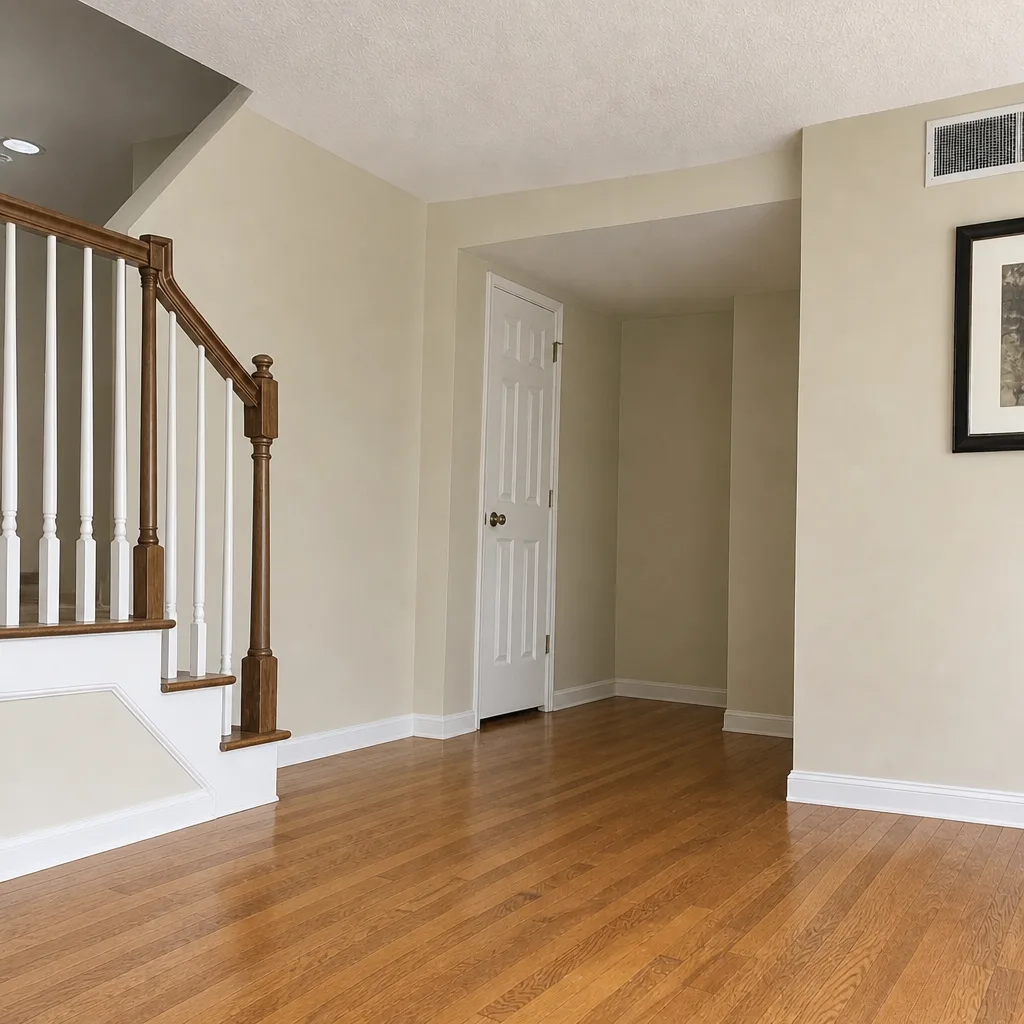 After
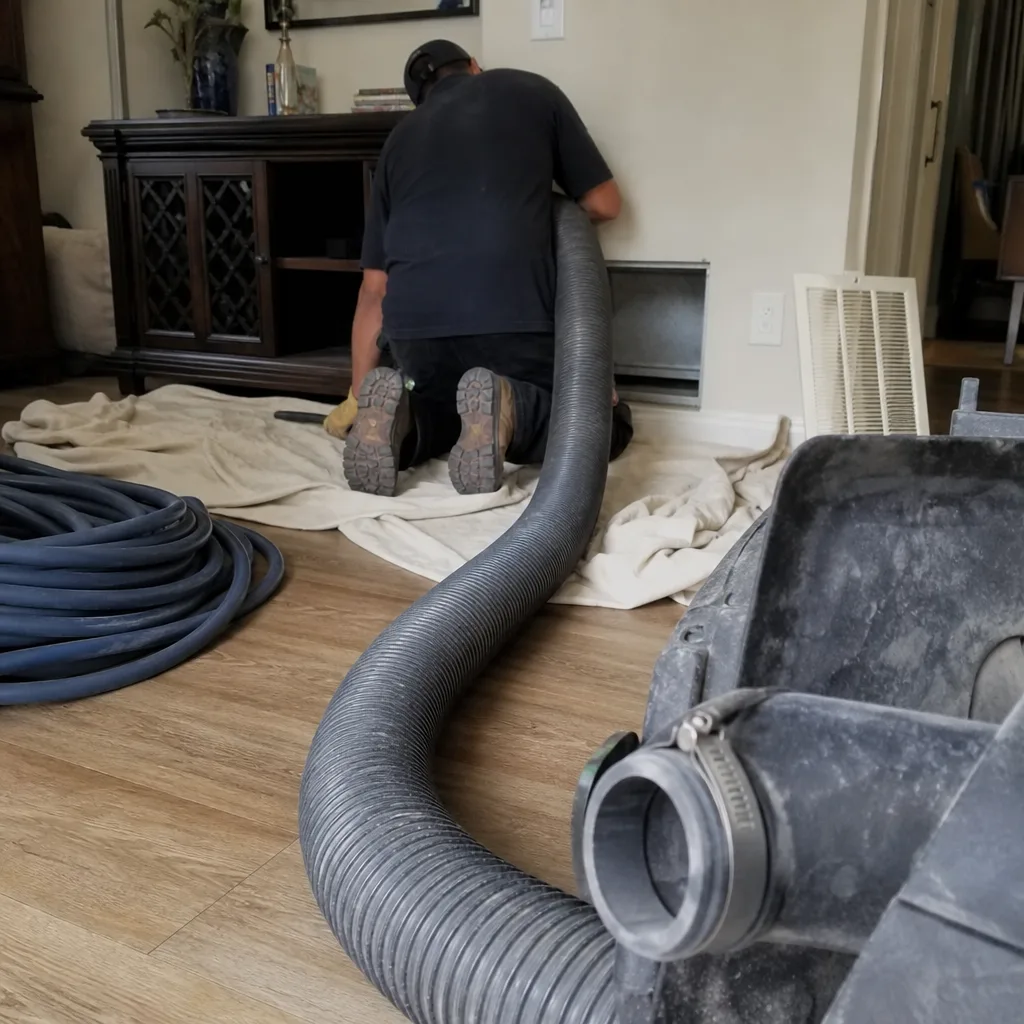 Before
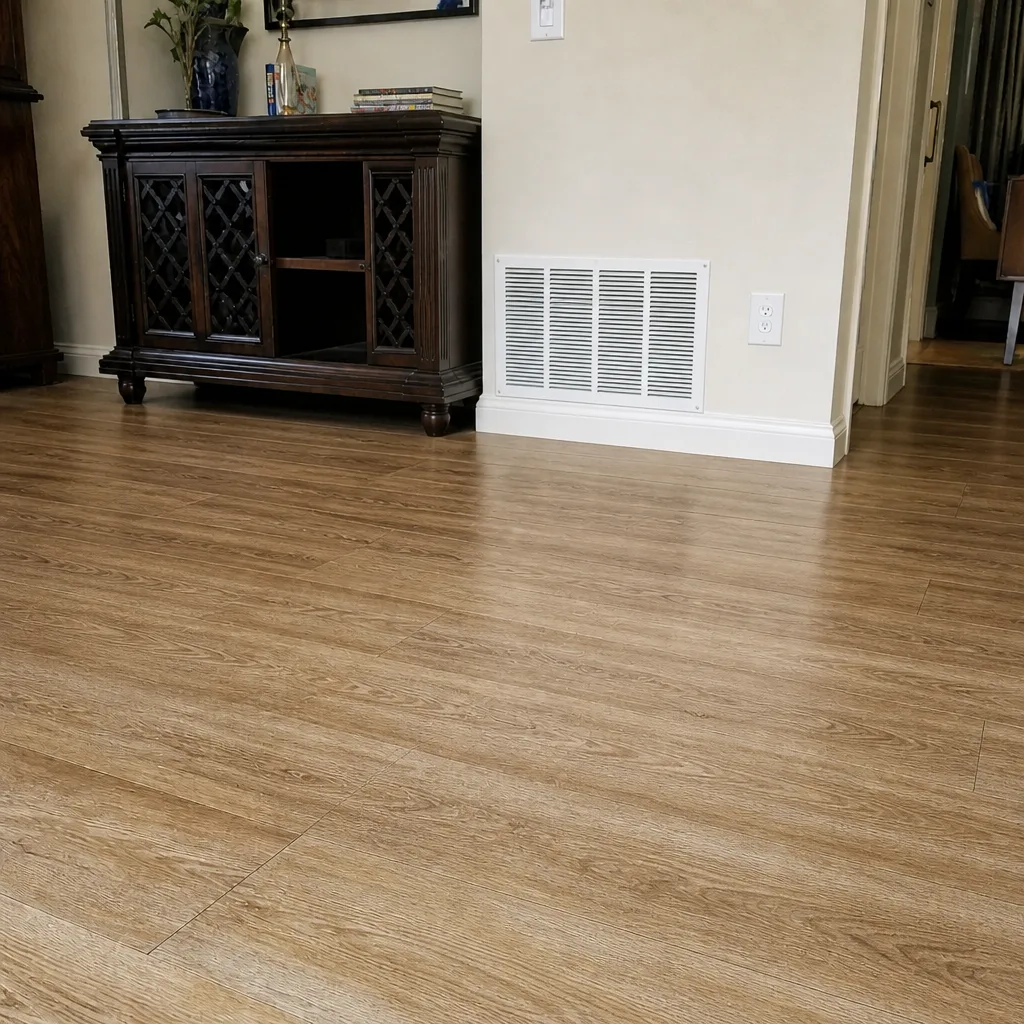 After
When to Call a Professional
Some of this is DIY territory: finding the disconnect, noting a filter gap, taking photos. The rest isn’t. Call a professional after any fire event before the HVAC system runs again, if you smell smoke or mustiness when the heat comes on, if a duct run got wet during a rain event, if you can see torn jacket or separated joints in the attic, or if a dryer is taking longer than it used to. Those last two aren’t emergencies, but they’re the kind of thing that becomes one eventually. Laguna Hills Air Duct Cleaning offers free estimates in Laguna Hills. Call (888) 435-4470. We answer 24/7. Fast dispatch from 7am to 7pm, Sunday through Friday. Shutting the system down during a smoke event and getting a camera inspection afterward are the two moves that matter most, and both are simple once you know to make them.
Frequently Asked Questions
It comes in through the system, not the windows. Return duct leaks in the attic, gaps around the filter, and a partially open outdoor air damper all let outdoor air into the air stream, and the blower pulls it in every time it runs. Closed windows don’t stop a pressure-driven leak.
No. Turning the system off is the most protective step you can take during heavy smoke, because a running blower pulls outdoor smoke into the system and distributes deposited particulate. Shut it down at the thermostat and leave it off until the air clears and the system has been inspected.
Longer than most people expect, because the residue is embedded rather than sitting on the surface. Soot and smoke particulate settle into flex duct liner and lift off again with each heating cycle, so a system that isn’t cleaned keeps re-releasing material into the home for weeks and months. Only a camera inspection tells you how deep the deposit runs.
It depends on the duct material and deposit depth. Light surface deposit on rigid metal duct usually cleans well. Soot that has penetrated the inner liner of flex duct generally can’t be fully removed, and liner replacement is the correct answer. An interior inspection determines which situation you’re in before any work starts.
Condition matters more than a calendar interval. Homes with pets, recent remodeling, or long-neglected return chases need it sooner than a sealed newer system, and fire or water events reset the clock entirely. The only reliable way to know is an inspection, and the estimate is free. Call (888) 435-4470 for an exact quote.
Take wide shots of the property and visible ash, then close-ups of every return and supply grille, the filter and its slot, and any water staining or sagging on duct runs. Keep the damaged filter rather than discarding it. Call (888) 435-4470 once the photos are taken and the system is off.
The Bottom Line
A duct system in Laguna Hills is a smoke pathway as much as an air distribution system, and the time to close those pathways is before fire season, not during it. Seal the return leaks and filter gaps, get filtration up to MERV-13 or higher with a system that can handle it, and know how to shut the system down fast. After an event, lock the system out, get a camera inspection, and let the remediation sequence run in order. Document everything before anyone touches it. Routine air duct cleaning and a clean dryer vent cleaning keep the baseline low so an event has less to work with.
Written by the team at Laguna Hills Air Duct Cleaning.