
Last updated November 24, 2026
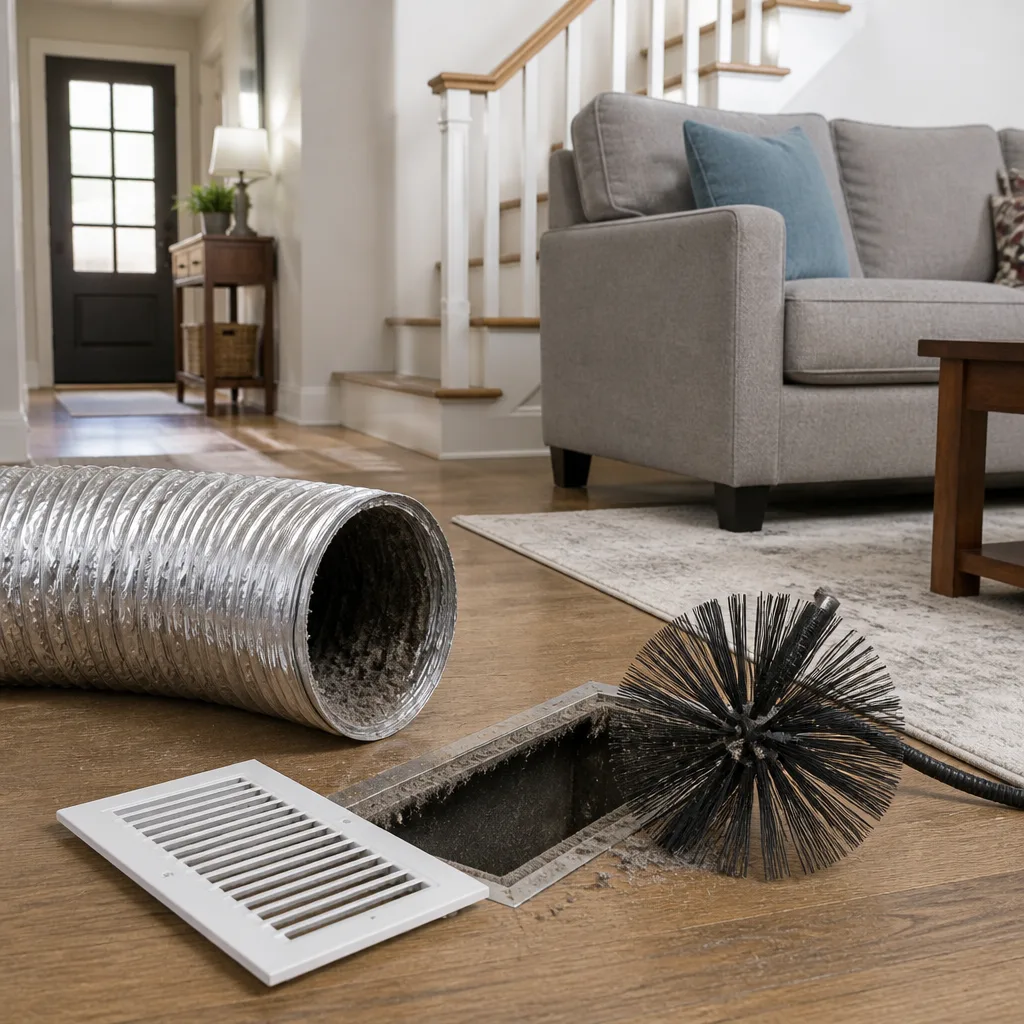 Whole-home duct cleaning
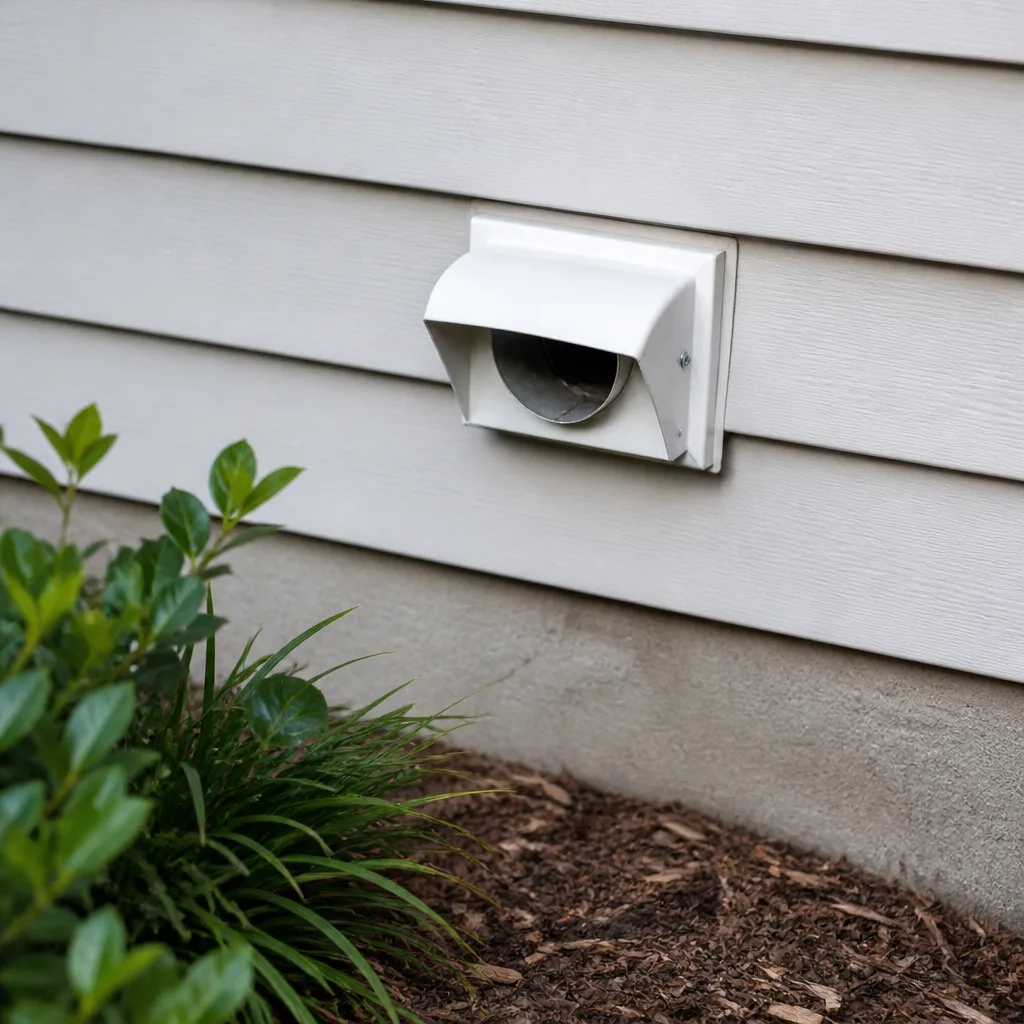 Dryer vent cleaning
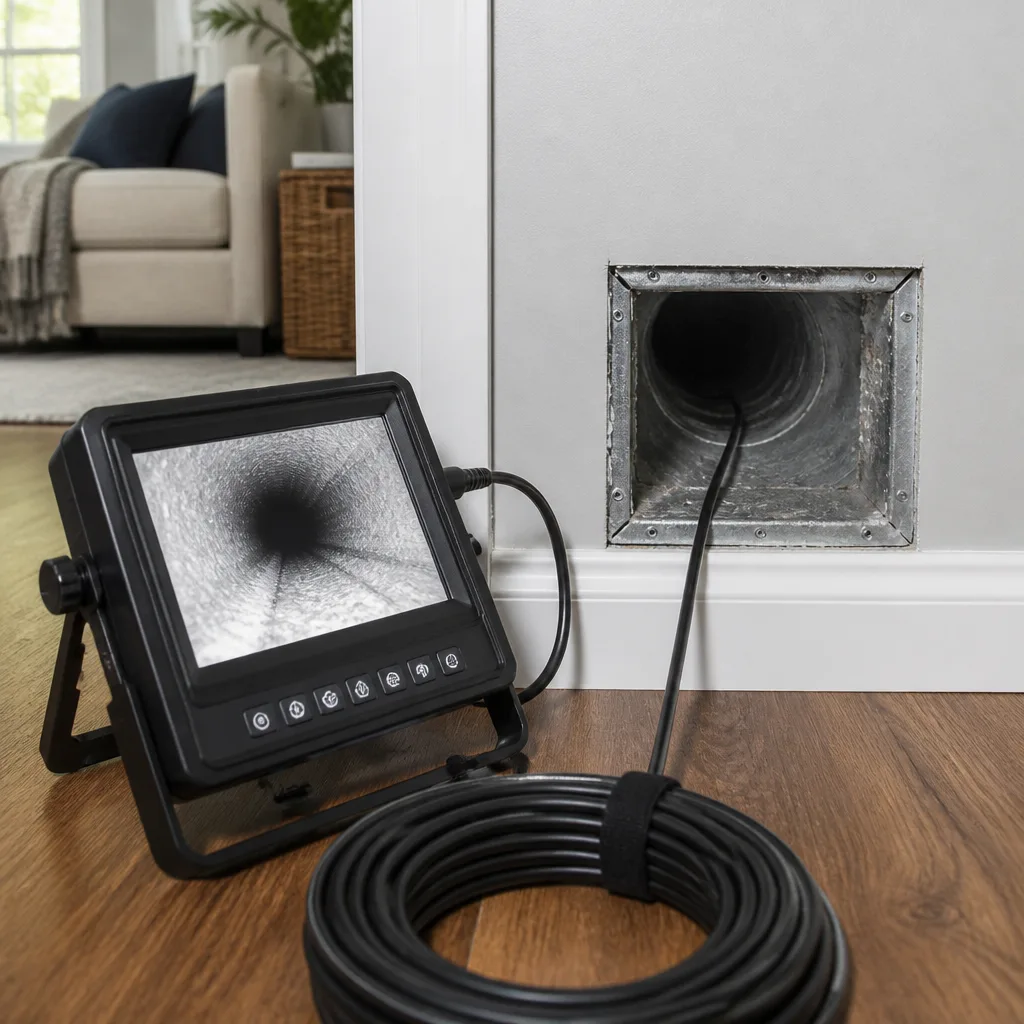 Camera inspection
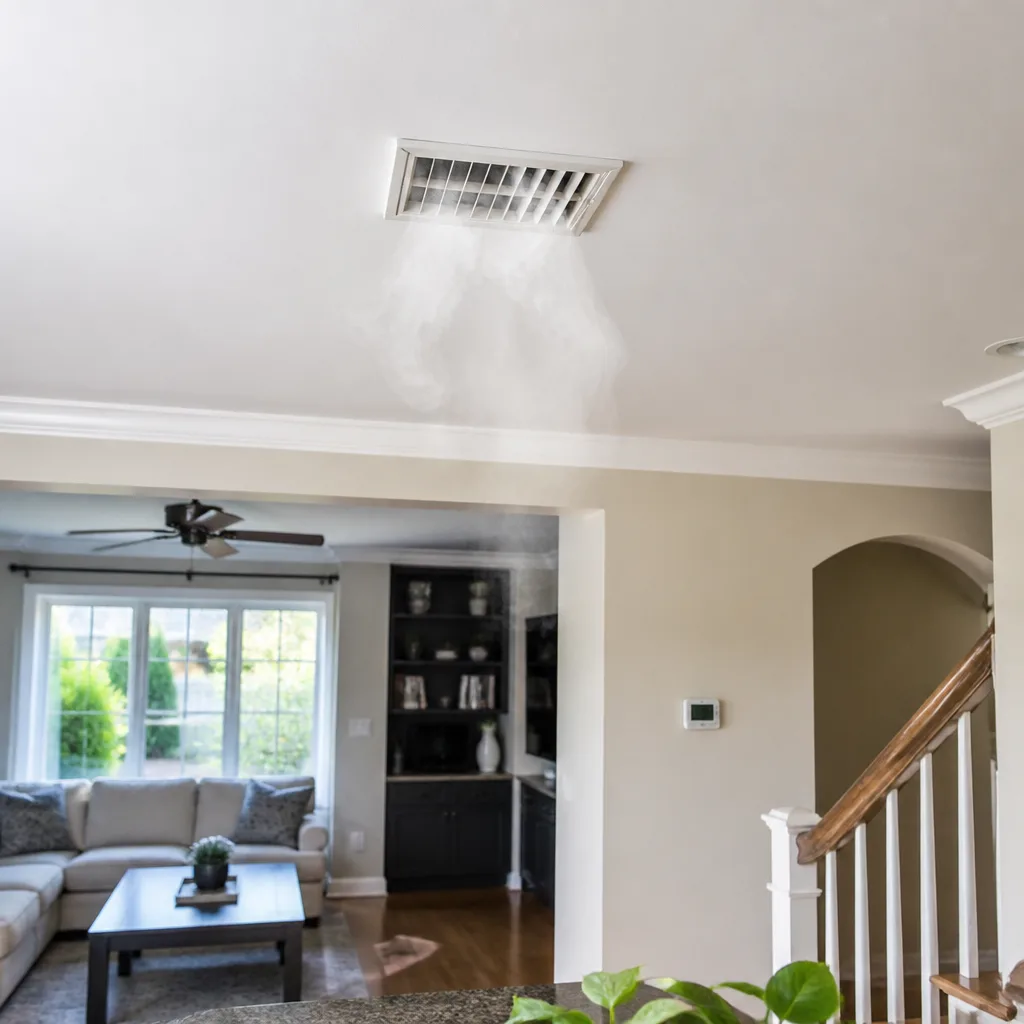 Sanitizing & deodorizing
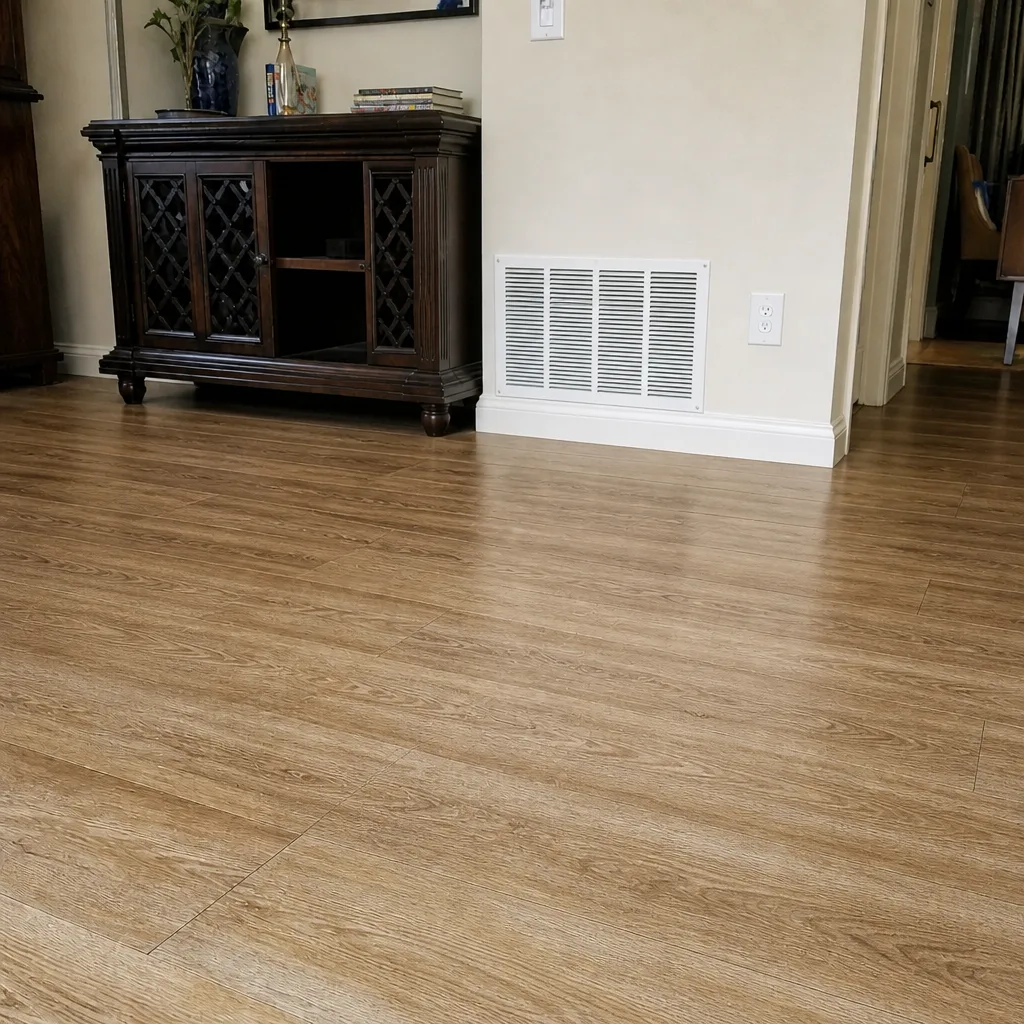
Whole-system duct and dryer vent check with before-and-after photos - you see exactly what came out of your vents
That "$99 whole-house special" is a bait ad - the real number appears once they are in your hallway, or the "clean" is a shop-vac at the register. We photograph the inside of your ducts before and after instead.
Seasonal Air Duct Cleaning Care for Laguna Hills: Year-Round Homeowner’s Guide
Most homeowners treat duct cleaning as an annual checkbox, usually scheduled whenever a coupon lands in the mailbox. In Laguna Hills, that approach misses the point entirely. This city sits where ocean-influenced air meets canyon wind corridors and wildfire smoke drifting off the inland ridges, which means the air your HVAC system pulls in changes character several times a year, and the contamination inside your ducts changes with it. A single annual cleaning does little if it lands in the wrong month. This guide maps the four functional air quality seasons we watch in Laguna Hills and pairs each one with specific duct care actions, so your system is maintained for the conditions it actually faces.
Quick Answer
Air duct care in Laguna Hills works best when it follows four functional seasons rather than the calendar: a May-July marine layer period, an August-September dry heat and dust period, an October-December Santa Ana wind and wildfire smoke period, and a January-April recovery window that is the best time of year for full professional cleaning. Inspect at every seasonal transition and schedule the deep clean in the January-April window, after fire season and before the heaviest cooling months.
Styles & brands we work with
- Whole-home duct cleaning
- Dryer vent cleaning
- Camera inspection
- Sanitizing & deodorizing
Table of Contents
- The Four Air Quality Seasons of Laguna Hills
- May-July: Marine Layer Humidity and Coil Moisture
- August-September: Dry Heat, Construction Dust, and Flex Duct Wear
- October-December: Santa Ana Winds and Wildfire Smoke Infiltration
- January-April: The Optimal Window for Professional Cleaning
- Pre-Season and Post-Season Inspection Actions
- What Professional Equipment Actually Does
- Common Mistakes to Avoid
- When to Call a Professional
- Frequently Asked Questions
The Four Air Quality Seasons of Laguna Hills
Weather services split the year into four calendar seasons. For duct care in Laguna Hills, the divisions that matter are different. The air inside a home here goes through four distinct phases, and each phase puts a different kind of load on the duct system. Understanding these phases is the foundation of any maintenance plan that works.
- May-July, marine layer period. Cool, humid Pacific air pushes inland and settles into the Saddleback Valley overnight and into the morning. Windows stay closed more, and the system runs in cooling mode against moist outside air.
- August-September, dry heat and dust. Inland heat builds, the air dries out, and fine particulate from grading, landscaping, and construction activity gets airborne and drawn into returns.
- October-December, Santa Ana wind and smoke season. Offshore winds push dry air down the canyon corridors, carrying wildfire smoke and ash from the ridges toward the coast.
- January-April, recovery window. Rain settles the dust, outside air quality improves, and the system runs lightly. This is the window when a full professional cleaning does the most good.
Notice what’s absent: no hard winter, no freeze-thaw cycle, no snow load. Laguna Hills doesn’t punish duct systems with cold. It punishes them with dry wind events, smoke intrusion, and months of closed-window operation. That’s a different maintenance problem, and it calls for a different schedule.
May-July: Marine Layer Humidity and Coil Moisture
The marine layer is the marine layer: a low, cool, damp cloud deck that rolls in off the Pacific and often sits over the canyon ridges through the morning. Relative humidity climbs, homes stay sealed up, and the air conditioning runs to keep interiors comfortable. That combination creates a specific duct problem.
Your evaporator coil sits inside the air handler or plenum, and it condenses moisture out of the air any time it’s cooling. Normally that condensate drains away. But when a system has been running in a humid stretch and the coil or drain pan has dust and biofilm accumulated on it, the moisture has something to feed on. Over a season, that can mean biological growth on the coil surface and at the plenum connections, and once growth establishes itself there, the air moving through the system picks up spores and carries them into every room.
There’s a second marine-layer effect specific to this region. Homes closer to Aliso Viejo and along the canyon corridors sit in the path of that humid inflow, and they often have flex duct in the attic or crawlspace. Flex duct has an inner liner that handles air and a vapor barrier or insulation jacket around it. When the liner takes on sustained moisture load, it can sag, separate from the fittings, or degrade at the joints where it was taped. A degraded liner doesn’t just lose insulation value; it becomes a surface where mold can grow and where air leaks escape into unconditioned space.
What to do in the May-July window:
- Walk the attic or crawlspace and look for sagging flex runs, visible condensation, or dark staining at duct joints.
- Run the system and listen at each register for whistling or hissing, which can point to a disconnected or torn liner.
- Smell-test near return grilles. A musty odor in summer often traces to coil or drain pan growth, not to the ducts themselves.
- Have the coil and plenum inspected before the heaviest cooling months, when more moisture will move through the system.
If any of those checks turn up growth or liner damage, cleaning alone won’t fix it. This is the point where a full-system approach matters: cleaning, then repair or sealing, then a sanitizing treatment with a product like Guardsman on the affected surfaces. A vacuum truck that removes dust and leaves the growth behind hasn’t solved your problem.
August-September: Dry Heat, Construction Dust, and Flex Duct Wear
By late summer, the marine layer retreats and the air dries out. Inland heat builds, and the ground gets dusty. This is the season when fine particulate matters most in Laguna Hills, because the system is running its longest cooling cycles just as more dust is airborne.
Homes near active construction or recently remodeled properties have a particular load in this window. Sheetrock dust, sawdust, and fine silica settle into return grilles and get pulled into the system. A standard furnace filter catches the larger particles, but the fine fraction that slips past settles on the duct walls, on the blower wheel, and on the evaporator coil fins. Over a season that buildup cuts airflow, and reduced airflow means the coil runs colder and can ice up, which makes the system work harder for less cooling.
The dry heat also stresses the duct system mechanically. Duct tape and mastic at joints in an unconditioned attic expand and contract with temperature swings. Seams that were tight in spring can open slightly by late summer, and each opening becomes a path for air from the attic to enter the conditioned space. Attic air in this climate isn’t just hot; it can carry insulation fibers, dust, and whatever has settled on the attic floor.
Practical steps for this window:
- Change the furnace filter on schedule during high-dust months; a loaded filter raises system pressure and can pull harder on every gap.
- After any interior remodeling, inspect return grilles for visible dust load and check whether the filter housing is holding debris.
- Look at accessible duct joints in the attic for separated tape or cracks, and have them sealed before the system’s heaviest cooling hours.
- Consider a higher-efficiency filtration setup. We work with Honeywell and Aprilaire filter cabinets and media, which hold more dust and hold it more reliably than a thin panel filter.
Sealing small gaps and upgrading filtration during the dry season reduces how much new material gets pulled into the ducts during the Santa Ana events that follow. You’re not just cleaning; you’re closing the doors that let contamination in.
October-December: Santa Ana Winds and Wildfire Smoke Infiltration
This is the season that matters most in Laguna Hills for how the duct system behaves, and it’s the season most homeowners misunderstand. The Santa Ana pattern is offshore wind: dry air pushing down from the inland ridges toward the coast, often carrying wildfire smoke and ash from fire activity in the hills and canyons to the east.
The common assumption is that a closed-up house is a protected house. In practice, a house with a running HVAC system is not a sealed box. When the system runs, it pulls return air from the interior and pushes supply air back in, and that circulation creates a pressure difference across the building envelope. The return side of the system is under negative pressure relative to the outdoors, and negative pressure pulls air in through every small opening: gaps around windows and doors, penetrations for plumbing and wiring, recessed light cans, attic hatch seams, and loose duct joints in the attic. During a Santa Ana event, the air being pulled through those gaps is exactly the air you’re trying to keep out.
So here’s the important detail: during a multi-day smoke event, your ducts recirculate whatever is already inside them, because the system is running in closed-window mode and there’s little fresh-air dilution. If the ducts have accumulated dust and debris, the system is stirring that material through the house along with the smoke that infiltrated. If the return ducts are leaky, they’re also drawing directly from attic and outbuilding air. This is why a dirty system can leave a home smelling of smoke a week after the winds stop and outdoor air has cleared.
Actions for the Santa Ana window:
- Before the season, have return-side duct runs inspected for leaks, especially any run in the attic or garage.
- Seal visible gaps at joints and penetrations so the system stops pulling from attic air.
- During an active smoke event, run the system on low fan and keep filtration in place rather than shutting it off; a closed filter housing still catches particles.
- After a smoke event, check the filter and replace it if it’s loaded, and note any lingering odor from the registers. Smoke odor that persists after outdoor air is clear usually means particulate has settled in the ducts and needs removal.
January-April: The Optimal Window for Professional Cleaning
If you schedule one professional cleaning per year in Laguna Hills, put it in the January-April window. That’s not arbitrary. Three things align in this stretch that don’t align at any other time of year.
First, it comes after fire season. The Santa Ana events of October through December are over, and any smoke or ash that infiltrated the system has had time to settle. Cleaning in the spring removes that accumulated load rather than redistributing it ahead of the dry season.
Second, it comes before the heavy cooling season. Cleaning in late winter or early spring means the evaporator coil, plenum, and supply and return ducts are clean heading into the months when the system runs hardest. A clean system with clean coils carries full airflow, which is exactly what you want in the marine layer period and the dry heat that follows.
Third, the system is running lightly. In the mild January-April stretch, the air conditioning cycles less, and the house can be open more often. That makes it easier to do a thorough job without interruption, and it means the cleaning has the maximum lead time before contamination builds back up.
When we perform this seasonal cleaning, the process covers the whole system, not just the supply registers:
- Source removal of debris from supply and return runs using an air duct cleaning platform, including rotary brush agitation and negative-pressure capture.
- Cleaning of the air handler, blower, and evaporator coil, which is where the heaviest biological and dust load tends to sit.
- Inspection of accessible duct joints for leaks that need sealing, done as part of HVAC cleaning.
- On request, sanitizing of cleaned surfaces with Guardsman treatments to address biological contaminants that survived the mechanical cleaning.
The winter window is also the best time to address the dryer vent, because the same logic applies: clean it before the appliance runs its heaviest load and while the weather lets you work around the house. That’s a separate service and a specific fire-safety job; dryer vent cleaning removes the lint that accumulates in the vent run and is the single biggest fire risk in a laundry area.
Pre-Season and Post-Season Inspection Actions
Annual cleaning is only one part of a working plan. The transitions between seasons are when problems are easiest to catch and cheapest to fix, because you’re looking for early warning signs rather than managing a system that’s already struggling. Here’s a walk-through we recommend for each transition.
Before May (entering marine layer):
- Inspect the air handler and drain pan for standing water or visible growth.
- Check filter condition and replace if loaded.
- Walk the attic or crawlspace for sagging or disconnected flex duct.
- Run the system briefly and listen at the registers for air leaks.
Before August (entering dry heat):
- Confirm filter housing is sealed and the filter is the correct size.
- Check return grilles for visible dust accumulation after any summer remodeling.
- Look for separated tape or cracks at accessible joints.
Before October (entering Santa Ana season):
- Have return-side runs inspected for leaks, especially any run in an attic, garage, or through an exterior wall.
- Seal visible joints and penetrations before the first wind event.
- Stock replacement filters so you can swap one mid-event if it loads up.
After December (entering recovery window):
- Note any lingering smoke or musty odor from registers.
- Check the filter after the last wind event and replace if loaded.
- Schedule the full professional cleaning for late winter or early spring.
Each of these checks takes a few minutes and costs nothing. What they prevent is the gradual accumulation that turns a manageable seasonal issue into a system-wide contamination problem by the time you notice it.
What Professional Equipment Actually Does
The difference between a real duct cleaning and a surface vacuum job comes down to equipment. Consumer shop vacs and the handheld equipment some services use can reach the register and the first few feet of the run, but they can’t agitate dust off the duct walls or capture it under controlled pressure. That’s why we work with contractor-grade equipment of the kind remediation professionals use.
Rotobrush systems use a rotary brush head on a flexible whip to physically agitate the inside of the duct run, then capture the loosened debris into a HEPA-filtered collection unit. The agitation matters because settled dust bonds to the duct walls; vacuum alone pulls the loose material and leaves the adhered layer behind. Rotary contact is what lifts it.
Nikro negative-air machines create and hold negative pressure inside the duct system so that when debris is agitated, it’s drawn toward the collection point rather than pushed into the living space. In homes where biological contamination is suspected, that containment is what keeps the work from becoming a redistribution event.
Abatement Technologies air filtration units are the containment standard in mold and contaminant work. We use them on-site to filter the air in the work area so that fine particulate and spores captured by the cleaning process don’t end up settling back into the home’s air.
Beyond cleaning, the full-system approach covers what happens after. Ducts that are cleaned but not sealed will pull outdoor air again at the next wind event. Ducts with a torn flex liner will grow contamination again at the next humid stretch. So the work includes inspection and sealing of accessible joints, and on request a sanitizing application with Guardsman products to address biological contaminants that mechanical cleaning can’t fully remove. We also install and service Honeywell and Aprilaire filtration components, which keep particulate load down between cleanings. That’s the difference between a cleaning and a maintenance relationship.
See the difference
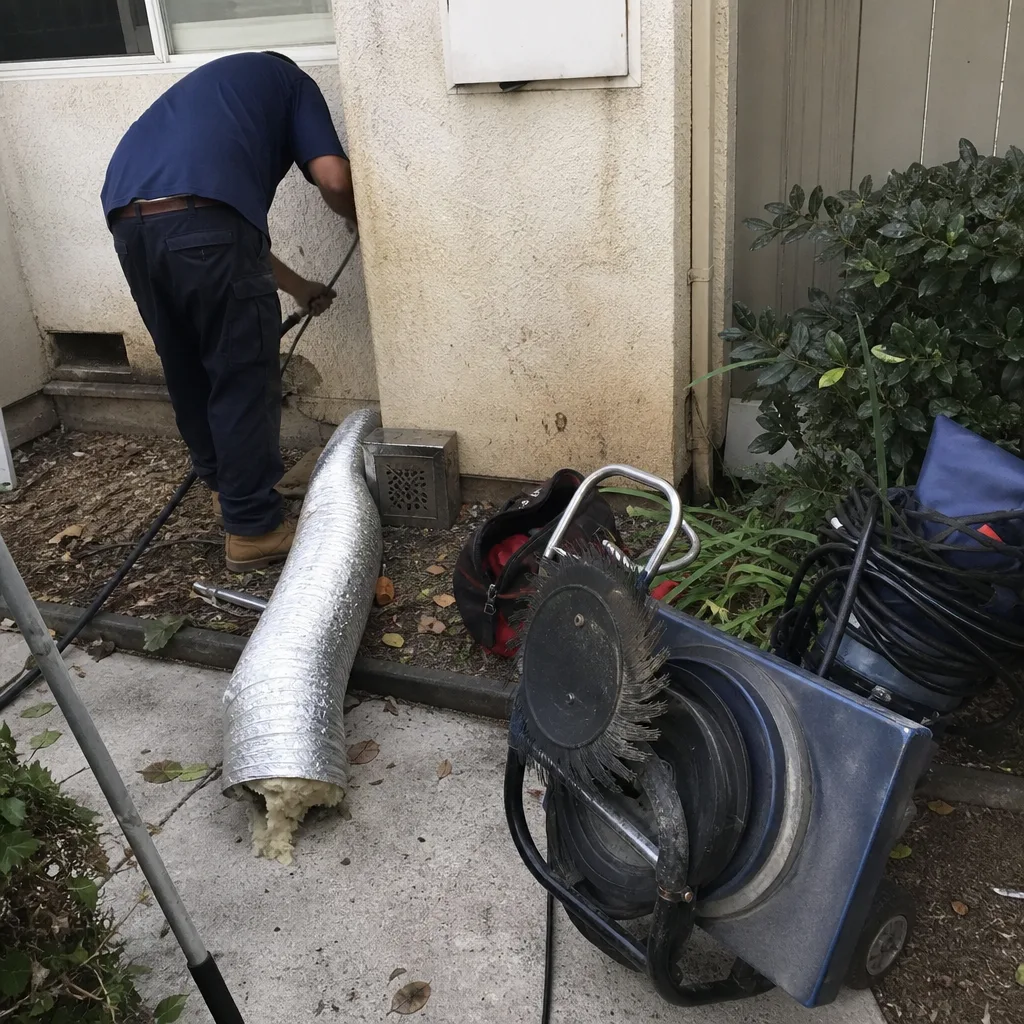 Before
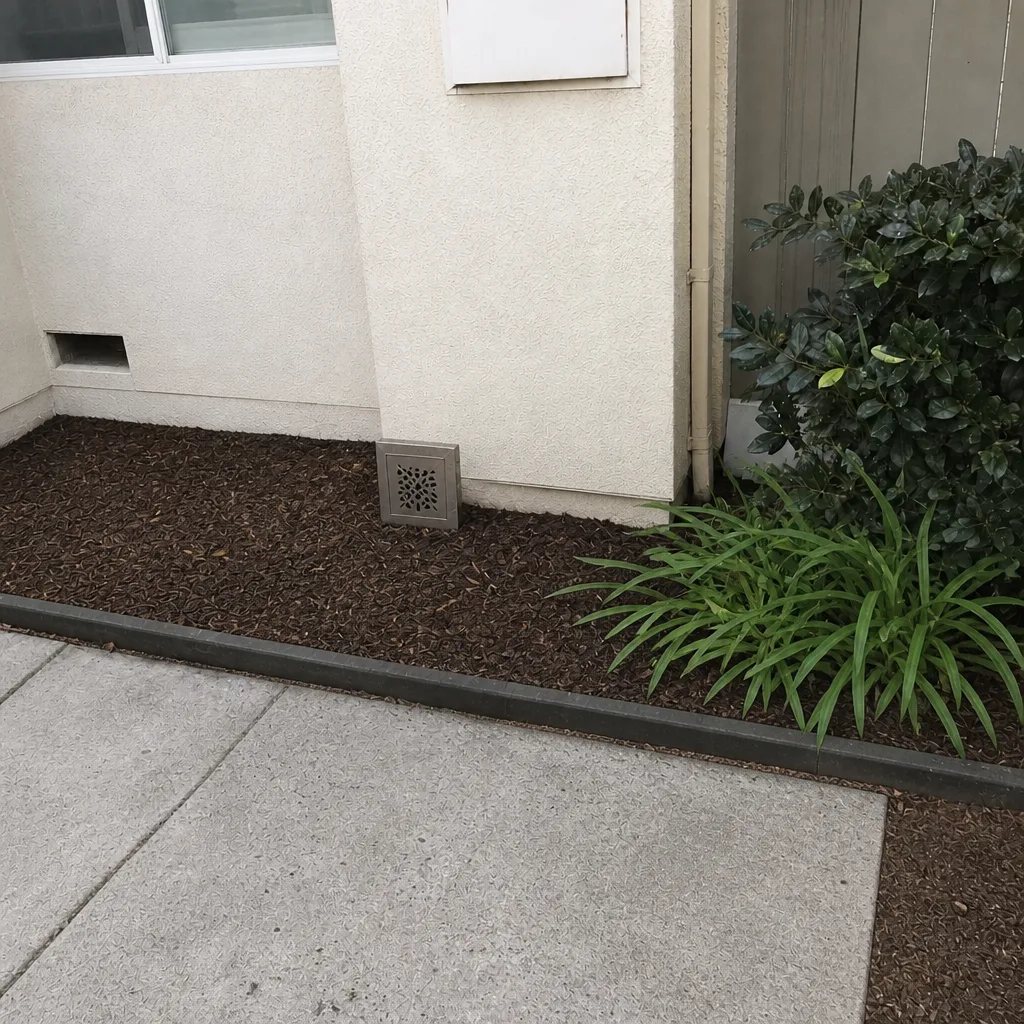 After
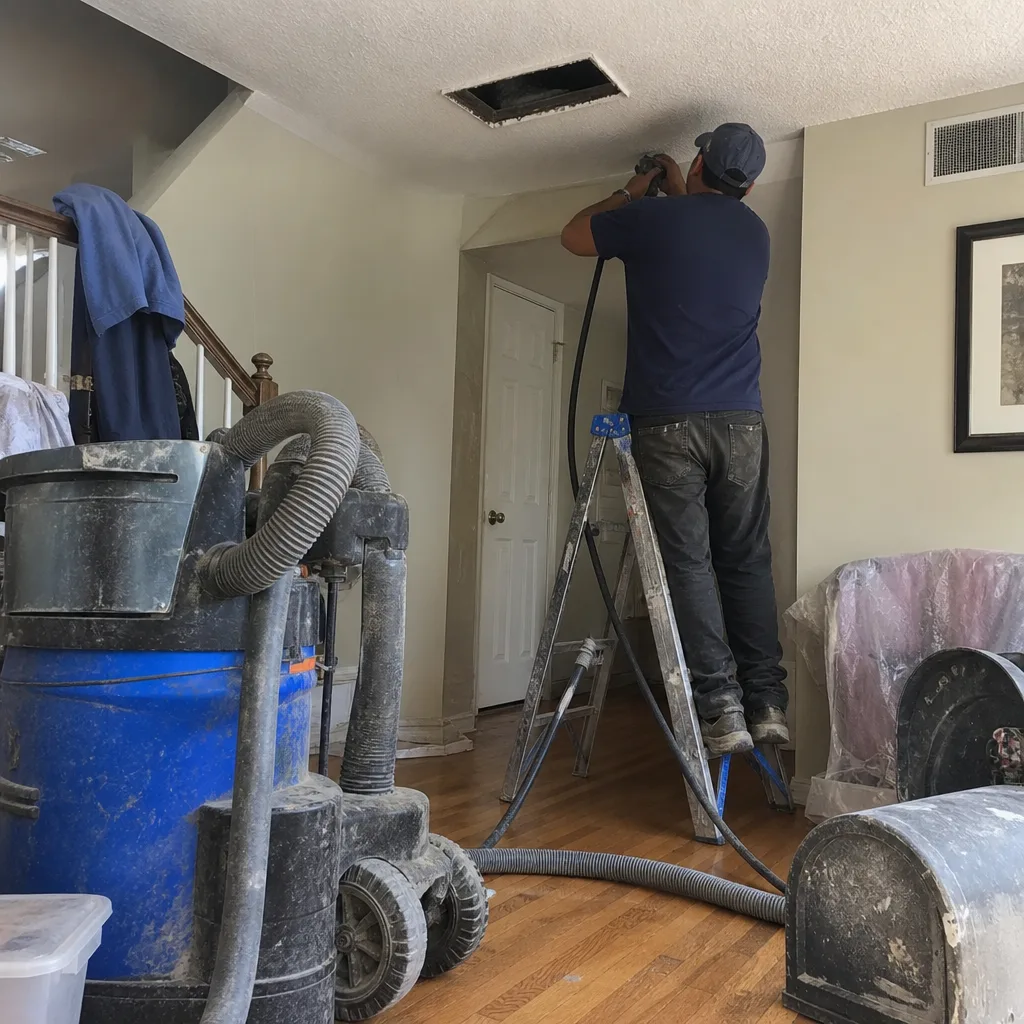 Before
 After
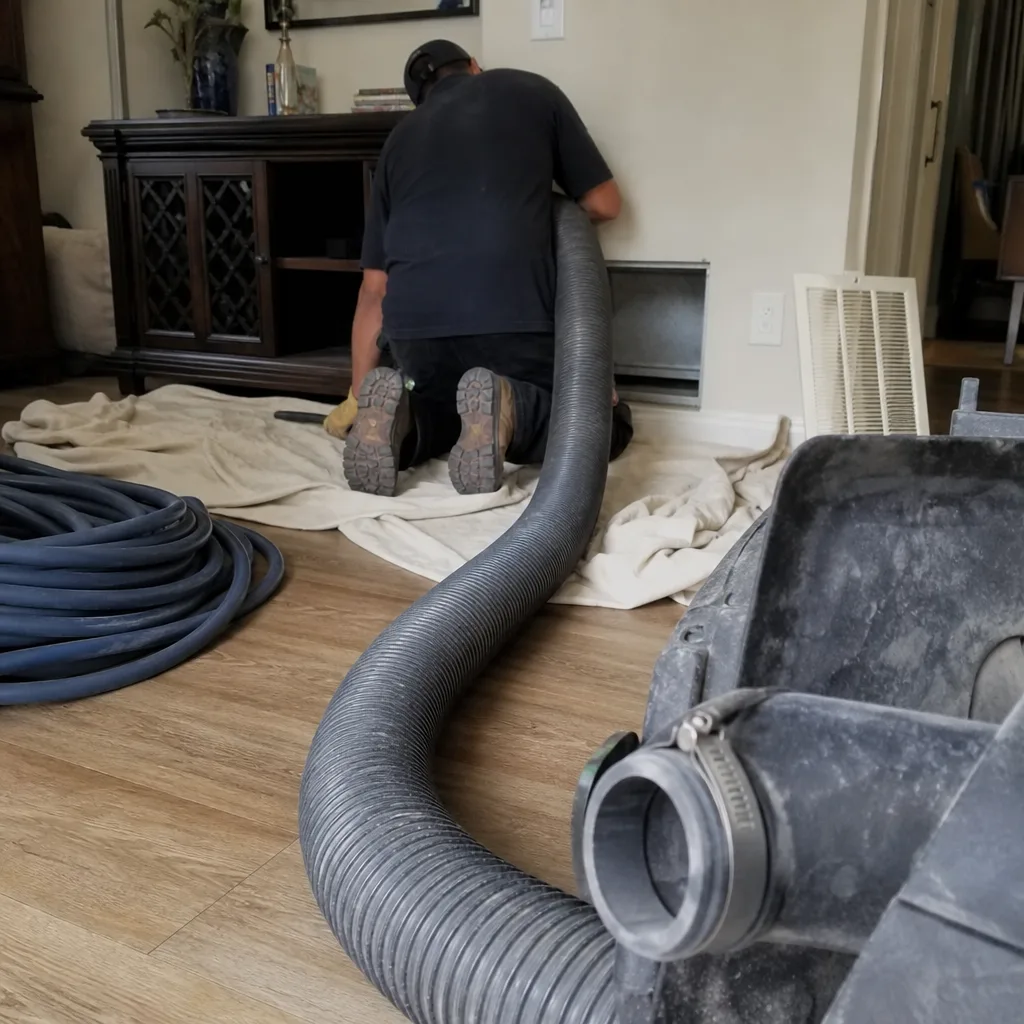 Before
 After
Common Mistakes to Avoid
- Scheduling cleaning at the wrong time of year. A cleaning in October or November can put the system back into service just as Santa Ana smoke arrives, and the ducts fill again immediately. Aim for the January-April recovery window instead.
- Cleaning the ducts but ignoring the air handler and coil. The heaviest biological and dust load often sits on the evaporator coil, blower, and plenum, not in the supply runs. A cleaning that skips the mechanical components leaves the source in place.
- Skipping the joint inspection. Leaky return ducts in the attic pull in whatever is airborne outside, including smoke during wind events. Cleaning without sealing means the contamination comes right back.
- Assuming a closed house is protected during a smoke event. A running HVAC system creates negative pressure on the return side and pulls outdoor air through dozens of small gaps. Sealing those gaps and keeping filtration in place is what actually protects indoor air.
- Treating the dryer vent as an afterthought. Lint accumulates in the vent run independent of duct cleaning, and a clogged vent is a fire risk. It needs its own service, not a quick pass with a vacuum hose.
- Using a small panel filter and expecting it to do the work of a media cabinet. A thin filter loads quickly and lets fine particulate through. Homes in dusty stretches or near active construction do better with a media cabinet and a scheduled replacement.
- Choosing a cleaning by the coupon rather than the process. A low teaser price that becomes a much larger invoice once the technician is on site is a known industry problem. Ask what the price covers before anyone starts, and ask for photos of the before and after.
When to Call a Professional
Some duct problems are visible to any homeowner, and some aren’t. Call us when you notice any of the following: a persistent musty or smoky odor from the registers that doesn’t clear when outdoor air improves; visible dust puffing out of a supply register when the system starts; whistling or hissing at a register that suggests a disconnected or torn liner; condensation or water staining near the air handler; a noticeable drop in airflow over a season; recent remodeling or a renovation that generated heavy dust; or a dryer that takes longer to dry clothes and a vent run you haven’t had cleaned. Homes near active construction and homes with flex duct in the attic should be scheduled proactively, even without symptoms.
Laguna Hills Air Duct Cleaning offers free estimates in Laguna Hills. Call (888) 435-4470. We answer 24/7. Fast dispatch from 7am to 7pm, Sunday through Friday. All work is performed with professional-grade equipment, and the local pro we connect you with is licensed and insured as California requires. One call covers cleaning, repair, sealing, and sanitizing, so you’re not coordinating between specialists.
Frequently Asked Questions
Once a year is the general recommendation for most Laguna Hills homes, scheduled in the January-April recovery window for the best results. Homes near active construction, homes with pets, and homes that weathered heavy smoke during the previous fall’s Santa Ana events may need attention sooner. Visual inspection at each seasonal transition tells you what the system actually needs.
It falls after fire season and before the heaviest cooling months. Cleaning then removes the smoke and ash that infiltrated during the Santa Ana events and leaves the system clean heading into the marine layer and dry heat periods, when it will run hardest. It also gives you the longest interval between the cleaning and the next contamination cycle.
Yes, especially the air handler and any flex duct runs in unconditioned spaces. The marine humidity adds moisture load to the coil and drain pan, and it stresses flex duct liners over time. Growth on a damp coil gets carried into every room by the system, so coil inspection during the May-July window matters more here than in drier inland areas.
Portable purifiers help in a single room, but they don’t address the duct system. What protects a whole home is sealed return ducts, intact filtration in the HVAC system, and cleaning after the event to remove what settled inside. Running the system with clean ducts and good filtration is more effective than running a portable unit in one room.
Pricing in this market typically depends on the number of systems and how accessible the ductwork is, and a written estimate sets the final price before any work starts. The estimate is free, and the quote is for the whole job rather than a per-vent price that grows on the invoice. Call (888) 435-4470 for an exact quote; estimates are free.
Low teaser prices usually cover only a partial service or a few accessible vents, and the invoice grows once the technician is on site. Ask what’s included, whether the air handler and coil are cleaned, and whether the quote is a flat price for the whole system. A real quote covers cleaning, inspection, and the components that actually hold the contamination. Call (888) 435-4470 for a clear estimate.
The Bottom Line
Laguna Hills doesn’t have one duct cleaning season; it has four functional air quality seasons, each loading the system differently. The marine layer feeds moisture to coils and flex liners. The dry heat loads ducts with construction dust and opens attic joints. Santa Ana winds push wildfire smoke into every gap on the return side, and a closed house recirculates that air for days. The January-April window is the best time to clean because it follows the fire season and precedes the heavy cooling months. Follow the seasonal checks, schedule the deep clean in winter, and treat cleaning, sealing, and sanitizing as one relationship rather than separate errands. That’s the whole plan.
Written by the team at Laguna Hills Air Duct Cleaning.