
Last updated November 24, 2026
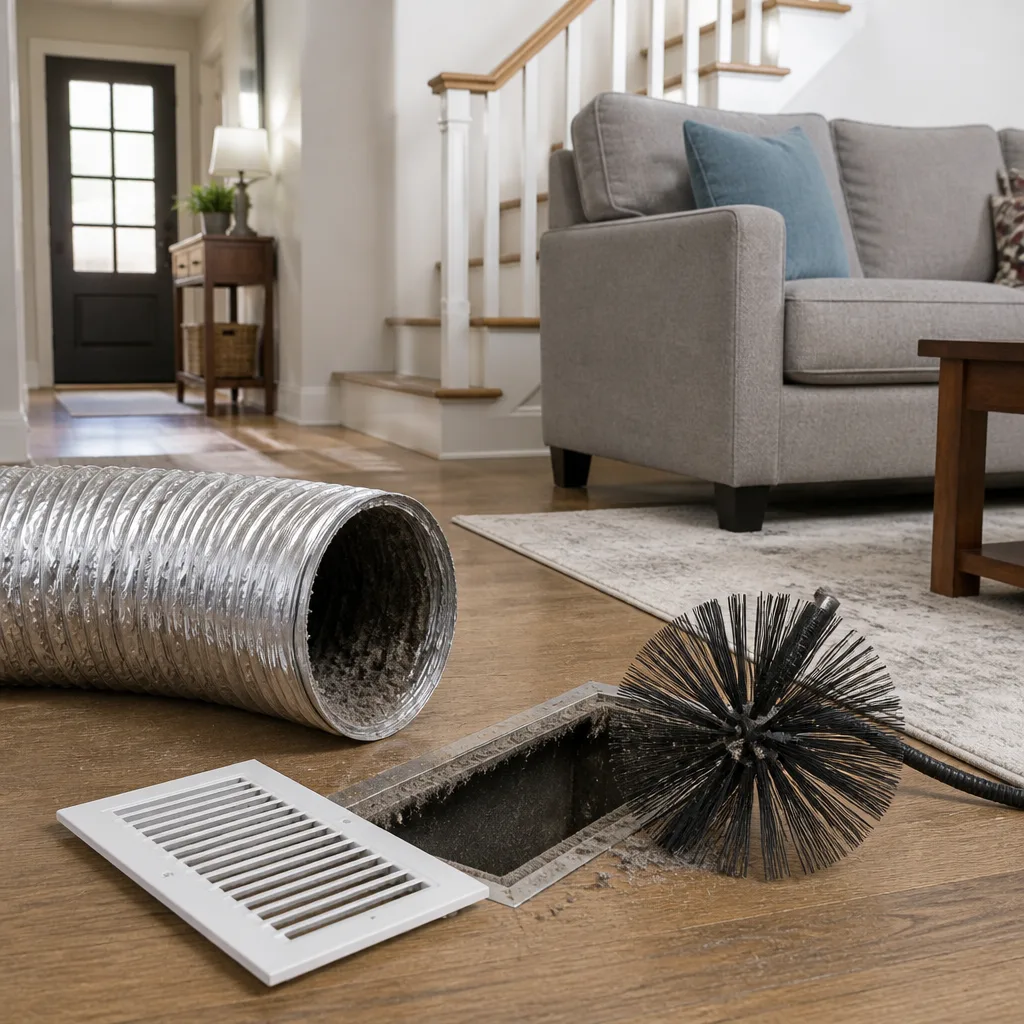 Whole-home duct cleaning
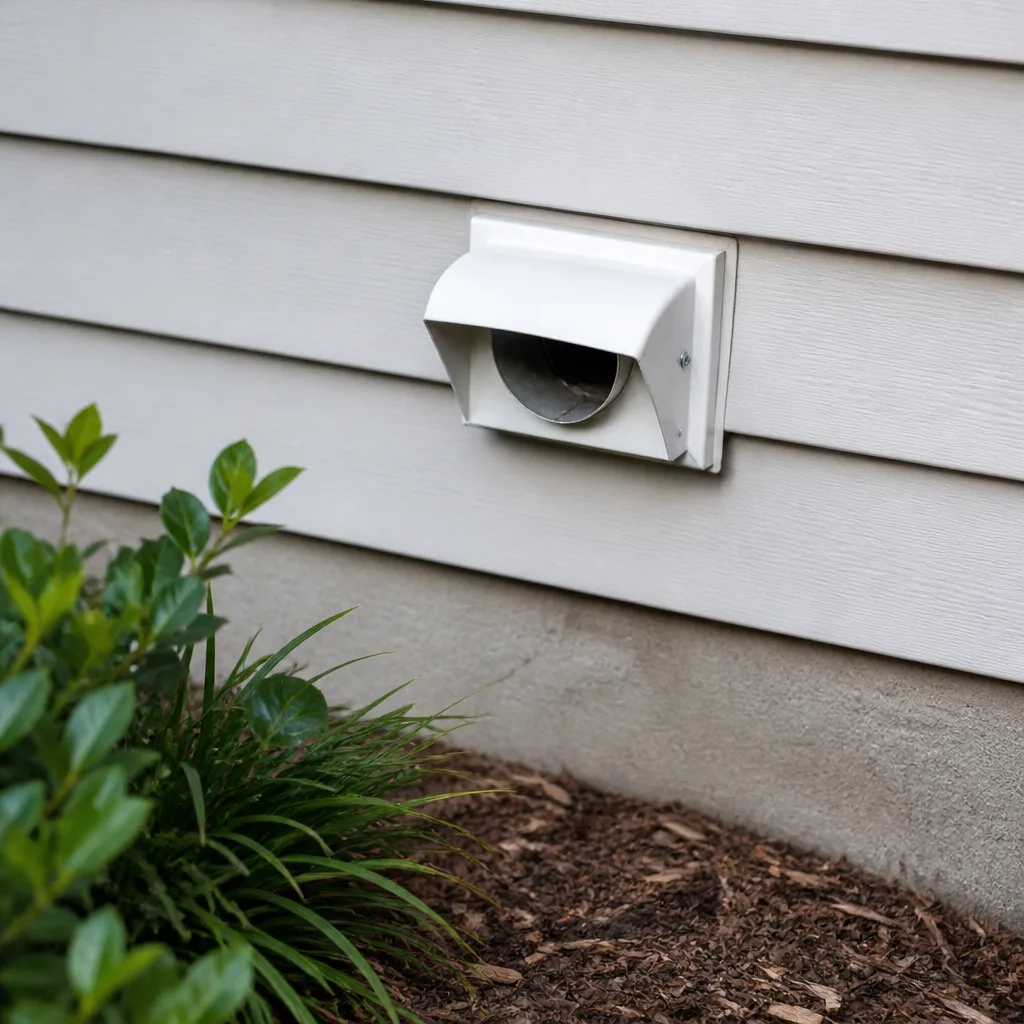 Dryer vent cleaning
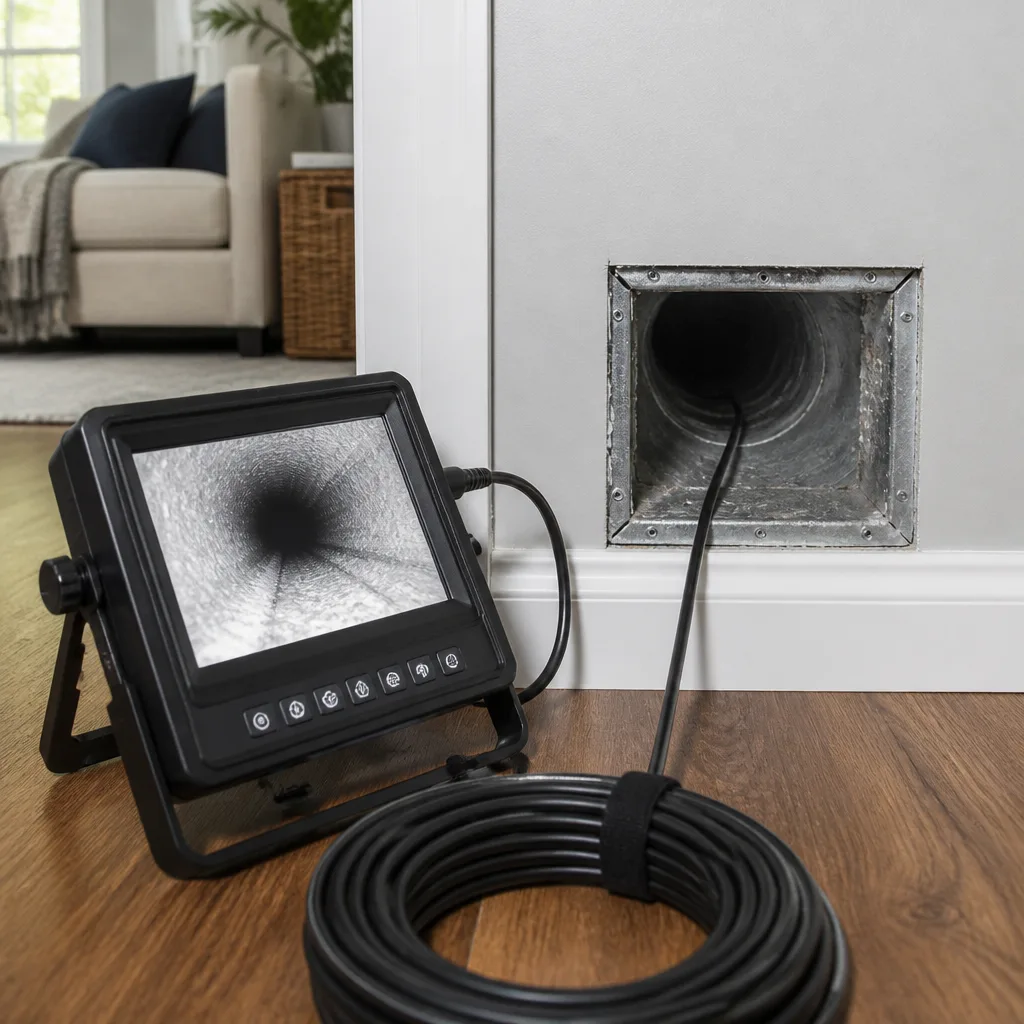 Camera inspection
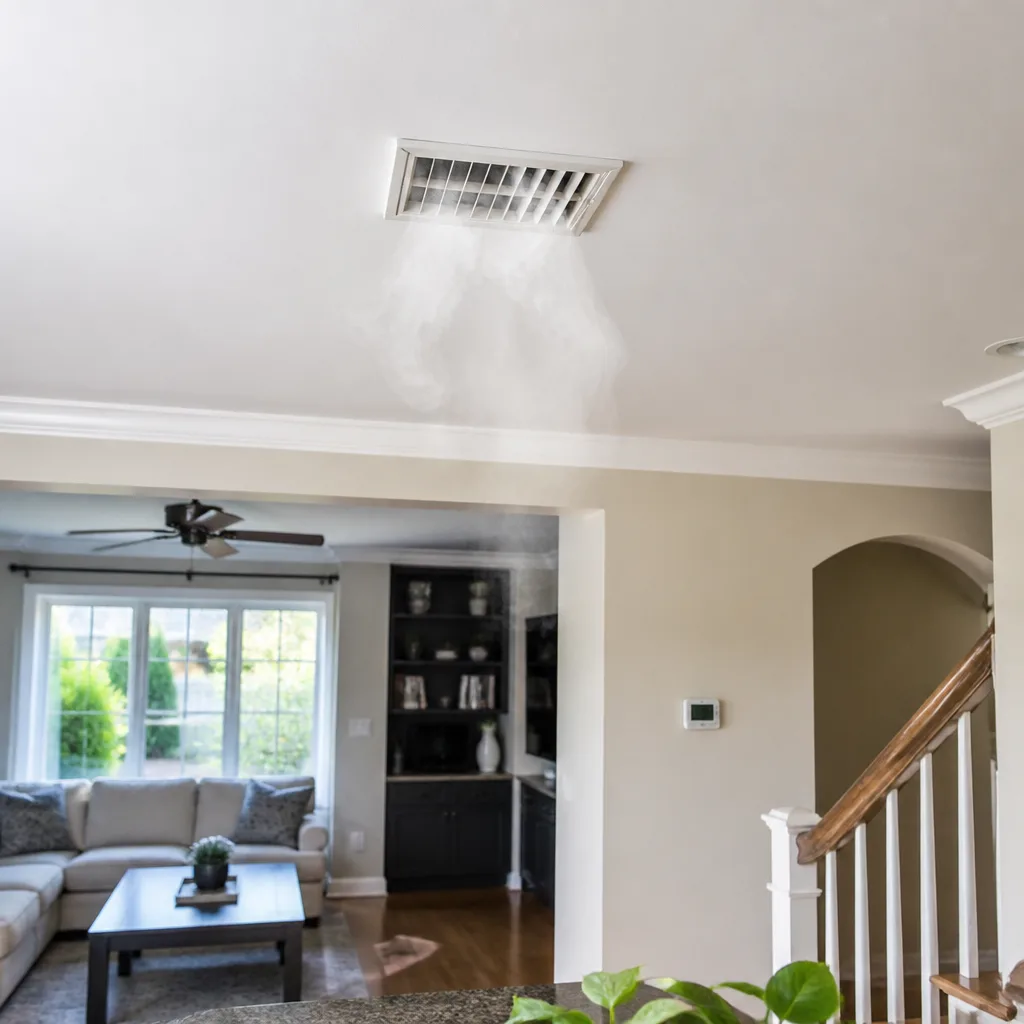 Sanitizing & deodorizing
Whole-system duct and dryer vent check with before-and-after photos - you see exactly what came out of your vents
That "$99 whole-house special" is a bait ad - the real number appears once they are in your hallway, or the "clean" is a shop-vac at the register. We photograph the inside of your ducts before and after instead.
Choosing the Right Air Duct Cleaning Brand: A Buyer’s Guide for Laguna Hills
Every air duct cleaning company in Laguna Hills says the same things. “Professional equipment.” “Trained technicians.” “Satisfaction guaranteed.” The words are identical because the words cost nothing. What separates a contractor who can actually clean a duct system from one running a shop vac and a marketing website is sitting in the back of the truck, and almost no homeowner thinks to ask about it. Ask one question, though, and the conversation changes in a hurry: what is the CFM rating of your collection vacuum, and is it HEPA-filtered at the exhaust? The contractors who answer with a number and a brand name are the ones who know their equipment. The rest start talking about reviews. This guide shows you how to read those answers and pick the right air duct cleaning brand for your Laguna Hills home.
Quick Answer
The right air duct cleaning brand for a Laguna Hills home is the one that can tell you the make, model, and airflow rating of its collection unit, pairs contact-brush agitation with true negative-pressure collection, and offers inspection, cleaning, sealing, and sanitizing from one operation. Reviews and franchise signs tell you about marketing. Equipment tells you about capability. If a contractor can’t name the CFM rating of their vacuum or confirm HEPA filtration at the exhaust, that’s your answer.
Styles & brands we work with
- Whole-home duct cleaning
- Dryer vent cleaning
- Camera inspection
- Sanitizing & deodorizing
Table of Contents
- Why the Equipment Matters More Than the Reviews
- The Three Equipment Categories That Do the Work
- A Script for the Equipment Question
- Truck-Mounted Vacuum vs. Portable Unit: What Suits a Laguna Hills Home
- Why Service Breadth Signals Quality
- Franchise vs. Independent Local Operator
- What NADCA Membership Does and Doesn’t Verify
- How to Verify the Work After It’s Done
Why the Equipment Matters More Than the Reviews
Review platforms measure how people feel about an interaction. They don’t measure whether the far end of a twenty-foot trunk line actually got cleaned. A company with a perfect score can still be running a vacuum that moves a fraction of the air needed to lift accumulated debris from the walls of a duct. Review scores are a record of customer satisfaction, and that’s worth something, but they’re not a record of airflow, filtration, or containment. A homeowner reading this in Laguna Hills can compare two contractors with similar ratings and end up with wildly different results depending on the equipment behind the truck door.
This is why we suggest buyers flip the evaluation order. Look at the machine first, the service list second, and the reviews third. It’s counterintuitive, but it holds up. The brands a contractor carries reveal their technical capabilities directly. A company using a Rotobrush rotary brush system has invested in agitation that loosens bonded debris from duct walls. A company using a Nikro negative-air machine has invested in containment, which matters the moment a job disturbs anything that shouldn’t be in the air. A company that runs an Abatement Technologies HEPA-Aire unit is set up to keep the rest of the house clean while the work is happening. None of these are consumer-grade shop vacs with a branded sticker.
What we’ve seen in our work is this: the equipment list and the service list tend to grow together. A contractor with real collection and containment equipment eventually adds sealing and sanitizing because the infrastructure makes those services possible. A contractor with a single vacuum and a brush kit stays stuck in one lane. When you ask about equipment, you’re also indirectly asking how deep the company’s capabilities can go. That’s a more revealing conversation than any star rating.
The Three Equipment Categories That Do the Work
Three distinct types of equipment carry a proper duct cleaning job. A contractor may not use all three on every home, but a quality operation has access to each of them. Look for a brand name and a purpose for every category. If the answer for any one category is a vague nod, that gap will show up in the result.
1. Rotary Contact Brush Systems
Rotary brush systems, like the Rotobrush BioBrush line, push a spinning brush head through a flexible rod into the duct run. The brush does the physical work of breaking debris off the walls, including the fine dust that bonds to galvanized ductwork over years. Contact matters. A vacuum alone pulls loose material but can leave the stuck-on film in place. In a semi-arid part of Orange County, dust finds its way into return-air runs and settles in layers rather than soaking into the metal, and that layer only comes free with agitation. When a technician tells you they use a rotary system and can name the brand, they’re describing a process, not a marketing phrase.
2. Negative-Pressure HEPA Collection Units
This is the heart of the operation. A negative-pressure collection unit pulls a large volume of air from the duct system while the brushes agitate the interior, so anything loosened is captured rather than released into the house. Nikro negative-air machines are built on this principle, and commercial remediation contractors use the same platform. The two questions that separate a real unit from a glorified vacuum are airflow (measured in CFM) and filtration at the exhaust. A collection unit that filters at the intake but not the exhaust is still releasing fine particles back into the room you’re standing in. HEPA filtration at the exhaust closes that loop.
3. Sanitizing and Fogging Systems
Once debris is out, sanitizing addresses what remains: mold spores, bacteria, and allergens that settled into the duct lining and plumbing. Abatement Technologies HEPA-Aire portable units are standard in mold and contaminant containment work, and they’re part of the reason a proper sanitizing step can be done safely indoors. We use Guardsman sanitizing treatments after the cleaning phase, applied with the duct system sealed and contained so the fog reaches surfaces evenly rather than drifting into living spaces. Sanitizing after debris removal is the order that works. Doing it before, or doing it instead, doesn’t solve the underlying problem.
A Script for the Equipment Question
Most homeowners don’t know what to ask, so they ask about price. Price tells you what the contractor thinks the market will bear; equipment tells you what they can actually do. Here’s a short script you can read off your phone when you call a duct cleaning company in Laguna Hills. It’s specific enough that a knowledgeable contractor will answer smoothly and a less prepared one won’t.
- “What is the CFM rating of your collection vacuum, and is it HEPA-filtered at the exhaust?” A prepared contractor answers with a number and a yes. A weak answer is “it’s a very powerful unit” or “we use HEPA filters” without specifying exhaust filtration.
- “What brand of rotary brush system do you run, and does it reach the full length of the trunk line?” You’re looking for a brand name and a description of reach, not a promise.
- “Do you use a negative-air machine or an air scrubber during the job, and where does it sit?” A real containment setup places the machine at the collection point, not in an unrelated room.
- “What do you use for sanitizing, and are you applying it after the cleaning phase or before?” The answer should be “after.” Anything else is a red flag.
- “Can you show me before-and-after photos when the job is done?” A company with a documented process has a camera in the duct and shows you what it saw.
Acceptable answers share a pattern: specific tool, specific purpose, specific result. Unacceptable answers are all variations of “don’t worry, we use professional-grade equipment.” A homeowner in Laguna Hills with a sixty-year-old house on a slab and a multi-zone system doesn’t need reassurance. They need to know what’s pulling air out of the return and where it goes. Asking two of these five questions usually settles it. Asking all five settles it beyond doubt. If the contractor is comfortable with the questions, they’ll answer them conversationally. If they’re not, you’ve learned what you needed at no cost.
Truck-Mounted Vacuum vs. Portable Unit: What Suits a Laguna Hills Home
There’s a common assumption that a truck-mounted vacuum is always stronger. The truth is more specific. A truck-mounted unit can pull enormous airflow because it’s driving a large blower off the truck’s engine or a dedicated electric motor, and many whole-house duct cleanings start there. But the truck has to reach the system, and in a lot of Laguna Hills homes the hose distance is the limiting factor. Long driveways, gated properties, hillside lots with a flight of stairs between the street and the front door, and multi-story floor plans all mean the truck may not be able to serve as the only collection unit. A setup that works well for a tract home with a short driveway can stumble on a stepped lot with the air handler in the attic.
Portable units solve that problem differently. A Nikro negative-air machine or a comparable HEPA collection unit inside the home gives a technician the freedom to place the equipment next to the duct system itself, not at the curb. For a home with attic air handler access or a long narrow return run, that flexibility is what makes a thorough clean possible. The trade-off is that portable units cap the raw airflow they can pull. The best setups combine approaches: a truck-mounted vacuum where distance allows, and a portable negative-air machine for the rooms and runs the truck can’t reach cleanly, plus an Abatement Technologies unit to keep the work area contained.
Ask how a contractor handles this in practice. A company with real experience in the housing stock around Laguna Hills will describe both setups and tell you which one they’ll use on your home and why. A company that only has one and can’t adapt to your access situation is going to either skip runs or feed you a hose that loses its suction halfway through the job.
Why Service Breadth Signals Quality
A cleaning-only operation is built around a single visit and a single tool. A company that offers inspection, cleaning, sealing, sanitizing, and repair is built around a relationship, and that difference in infrastructure shows up in how the work gets done. Breadth isn’t a marketing line; it’s measurable in equipment, training, and how the crew is scheduled. When a company can offer air duct cleaning alongside duct repair and air quality treatment, they’ve had to invest in the training and equipment for every phase. That’s a different business than a van that shows up, vacuums the registers, and leaves.
Here’s what we mean in practice. Cleaning removes debris. Sealing addresses the leaks that let that debris back in – at joints, boots, and connections that have worked loose with age. Repair handles the physically damaged sections. Sanitizing treats the biological load that remains after the debris is gone. Filtration maintenance, often with Honeywell or Aprilaire components, keeps the whole system running cleaner between visits. Each phase depends on the one before it, and each one requires equipment a cleaning-only van doesn’t carry.
When you’re evaluating a contractor, ask which of those five categories they handle in-house and which they’d hand off. A legitimate answer is “we do these three and refer the rest.” A red flag is “we do everything” from a company whose only listed equipment is a vacuum and a brush. In Laguna Hills, where housing stock ranges from 1960s single-story tract homes to newer multi-story builds, sealing and repair tend to come up more often than homeowners expect. Ductwork in an older home flexes, sags, and loses its seals over time, and a company that can fix it in the same visit it cleans saves you the trouble of finding a second contractor.
Franchise vs. Independent Local Operator
Neither a franchise sign nor a local independent is inherently better. What matters is what’s behind the truck and who’s making decisions about the work. A franchise can carry excellent equipment, and a franchise can also be one owner operating under a national logo with minimal technical investment. An independent can be a fifteen-year specialist operating out of a well-equipped rig, and an independent can be a startup with a shop vac and a Google Business profile. The logo doesn’t tell you. The equipment and the answer to your questions do.
There are a few structural factors worth weighing in Laguna Hills. A franchise pays royalties to a parent company, which can affect where the money goes – equipment, training, or corporate fees. An independent makes those trade-offs locally and lives with the results in the same community where their customers do. Franchises often have standardized scripts; independents can be more flexible on the phone, which cuts both ways. Flexibility can mean responsiveness, or it can mean improvisation where a fixed process would be better. What matters is whether the person you’re talking to understands your specific setup – what kind of system, what kind of access, what kind of problem.
The most reliable approach is to treat franchise and independent as neutral labels and evaluate the same way for both: equipment list, service breadth, documentation process, and the answers to your questions. When a contractor can name their collection unit, their brush system, and their containment equipment without hedging, they’ve passed the test. Whether the truck has a national logo or a local wrap is cosmetic by comparison. That holds whether the home being serviced is a condo near the Laguna Hills Mall or a larger property up in Nellie Gail Ranch.
What NADCA Membership Does and Doesn’t Verify
NADCA membership and certification are worth asking about, and worth understanding accurately. The National Air Duct Cleaners Association sets industry standards for how duct cleaning should be performed, and certification through their programs indicates a company has committed to those standards and, in many cases, passed a knowledge assessment. That’s meaningful. A company that has taken the trouble to join NADCA has at least signaled that it wants to be measured against a formal standard rather than an informal one. It’s a useful filter, especially when comparing contractors with otherwise similar profiles.
What NADCA membership doesn’t do is verify the specific equipment on the truck. It doesn’t guarantee a particular CFM rating, it doesn’t confirm HEPA filtration at the exhaust, and it doesn’t tell you whether the technician arriving at your door has hands-on experience or just passed the company’s internal orientation. It’s an association-level credential, and associations accredit organizations, not individual truck setups. A NADCA-certified company with a retired van and a basic vacuum would pass the membership test and still be a poor choice. A non-member independent with a full Rotobrush and Nikro setup would fail the membership test and still do excellent work. That doesn’t mean skip the question; it means don’t stop there.
In our experience, the certification question is best paired with the equipment question. The certification shows organizational commitment. The equipment shows operational ability. You want both answered, and you want them answered with specifics rather than a certificate photo and a “trust us.” For a homeowner in Laguna Hills trying to pick through fifteen quotes, asking “are you NADCA certified” and “what’s the CFM on your vacuum” in the same breath takes about thirty seconds and reveals far more than either question alone.
How to Verify the Work After It’s Done
Verification is where good contractors and cheap contractors diverge sharply. A company that documents what’s inside the duct before and after has nothing to hide. A company that finishes the job and drives off with a verbal “all done” is asking you to trust a process you can’t see. The best contractors bring a camera into the duct at the start and show you what it finds – dust layers, debris, buildup on the plenum, damaged flex runs. Then they document what the same sections look like after. That record is the work.
- Ask for before-and-after photos before work starts. A contractor who knows what they’re doing will tell you yes without hesitation.
- Watch for the containment setup. If they’re running a HEPA unit, a negative-air machine, or protection on your floors and furnishings, they’re treating the work as an in-home job, not a truck-stop job.
- Ask what was found at inspection. A thorough technician can describe the state of your return plenum, main trunk line, and takeoff boots. If the description is vague, the inspection was vague.
- Confirm the sanitizing phase if it was part of the service. Ask which product was used and at what point in the process it was applied. Guardsman treatments should follow the cleaning phase, not replace it.
- Check the dryer vent line if it was included. A dedicated dryer vent cleaning is a separate service with its own equipment and its own verification, and it should be documented the same way.
If the contractor offers HVAC cleaning, ask how they handle the coil and blower compartment alongside the duct runs. The coil is where dust, debris, and biological growth tend to accumulate most, and it’s often the part of the system that plays the biggest role in how the house actually feels. A thorough job covers the ductwork and the equipment attached to it. That’s why we treat cleaning as the beginning of a relationship rather than the end of a transaction – a clean system is easier to keep clean when the filtration and sealing are maintained. Visit our Laguna Hills air duct cleaning page for the full menu.
Common Mistakes to Avoid
- Choosing on price alone. The cheapest quote almost always reflects the lowest equipment investment. A low-bid company cutting corners on collection airflow is going to leave your ducts looking much the same as before, which means you’ll pay twice. Ask about equipment before you ask about price.
- Taking a vague “professional equipment” claim at face value. That phrase means nothing without a brand name and a purpose. If the contractor can’t name the collection unit and its CFM rating, you don’t have an answer yet.
- Assuming a truck-mounted system is always best. In laguna hills homes with long driveways or attic air handler access, a portable negative-air unit placed inside the home often reaches places the truck hose can’t. Ask how the contractor handles access before they arrive.
- Skipping the pre-work inspection. A contractor who won’t look inside the duct before cleaning is guessing at the problem. Ask for photos of the return plenum and main trunk line before the work starts.
- Choosing sanitizing over cleaning. Fogging a duct system before debris removal traps biological material rather than removing it. Sanitizing belongs after cleaning, not in place of it. Ask when the sanitizing phase happens.
- Ignoring the dryer vent as a separate job. A dryer vent clogged with lint is a fire waiting for a spark, and it needs its own service visit with its own equipment. Ask whether a company treats dryer vent cleaning as a real service or an add-on.
- Not verifying the work. If you don’t see before-and-after documentation, you’re trusting a verbal summary. Ask for it up front; a contractor with a real process is happy to provide it.
See the difference
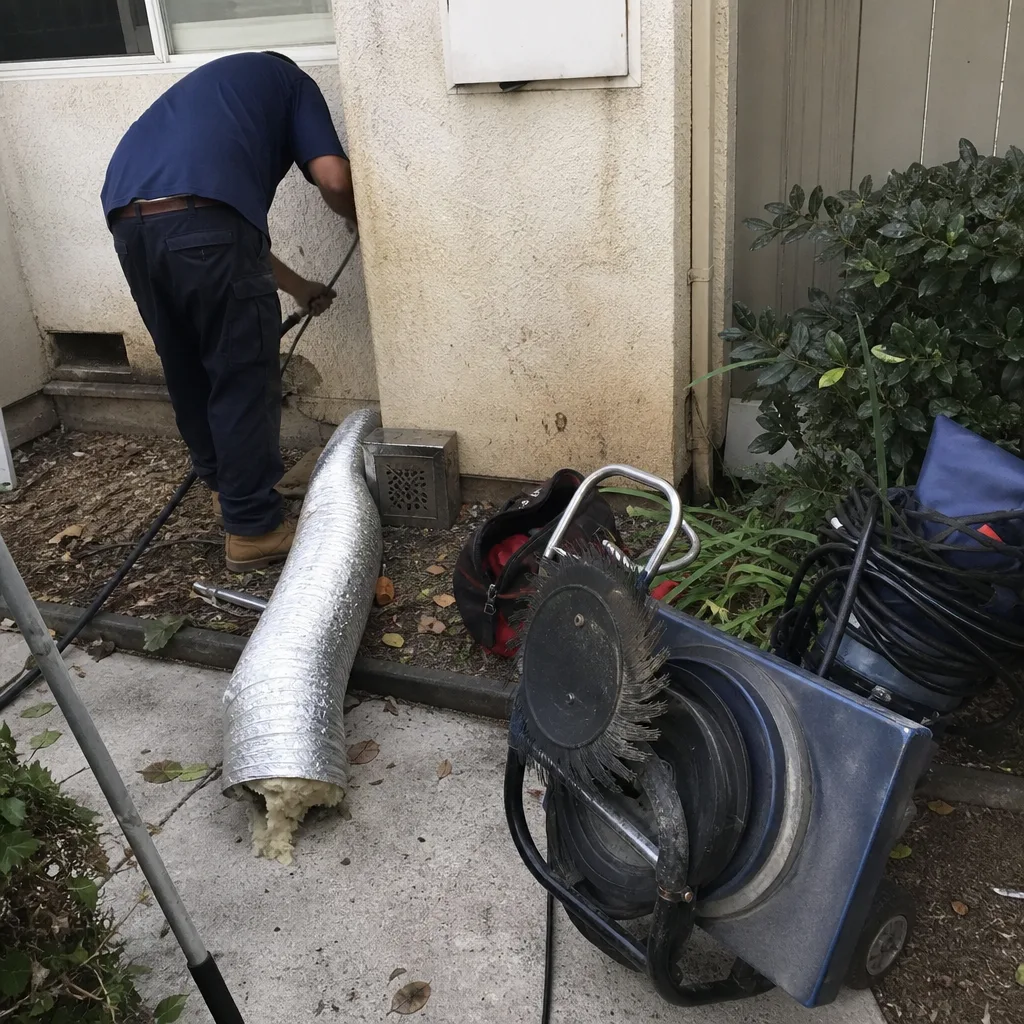 Before
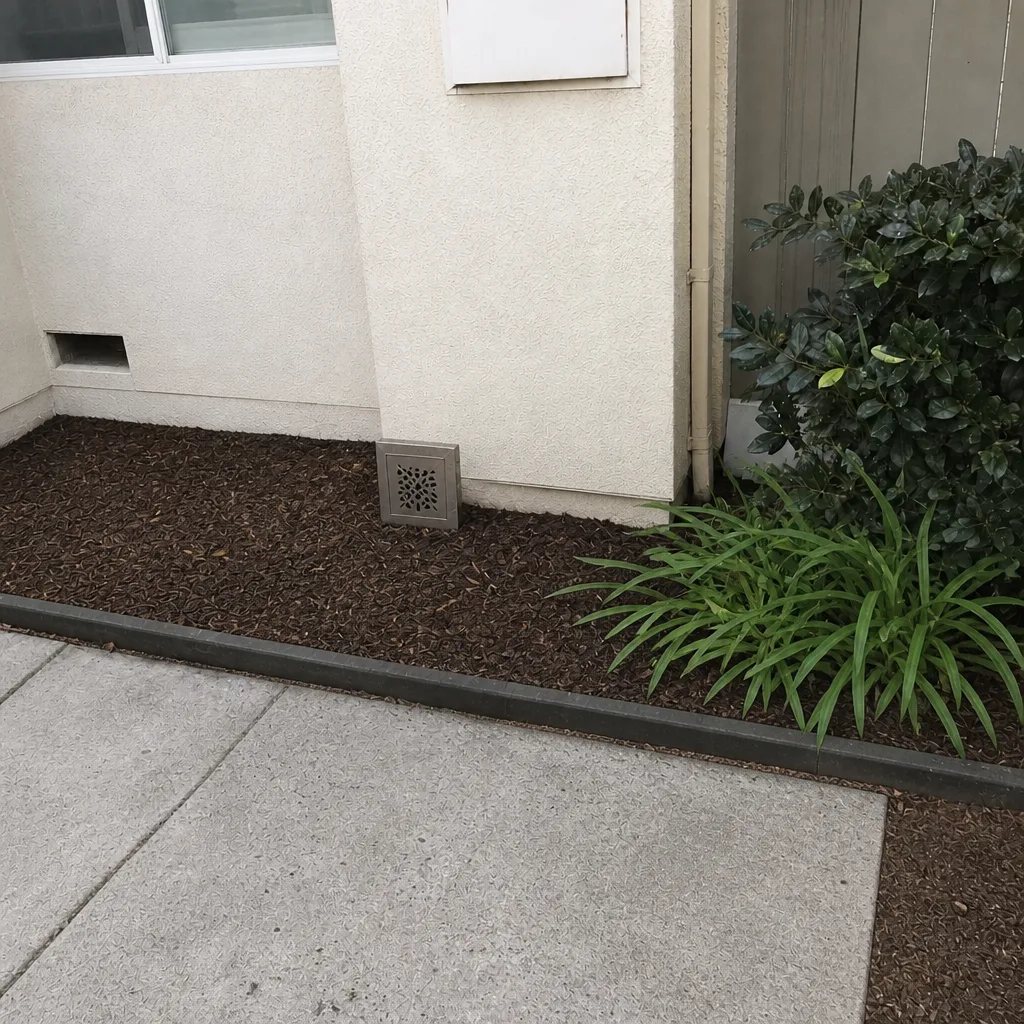 After
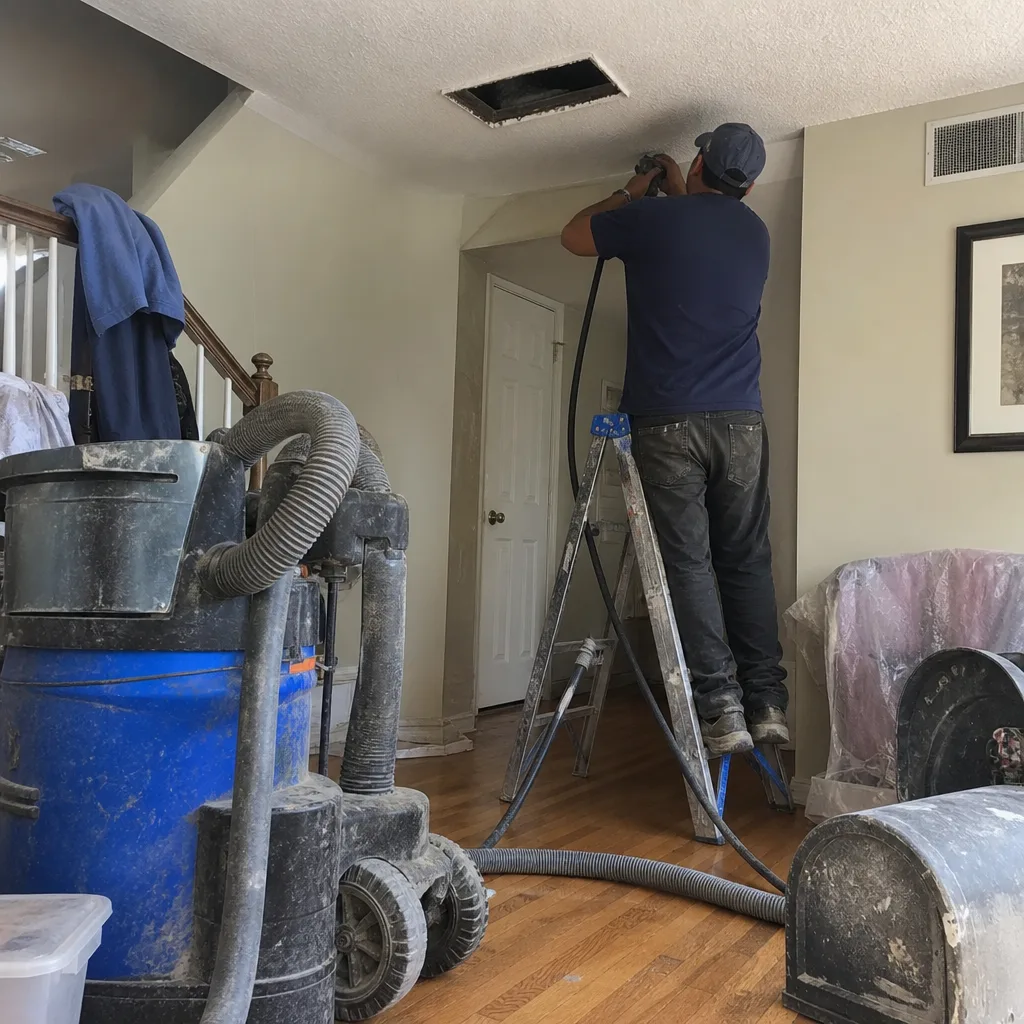 Before
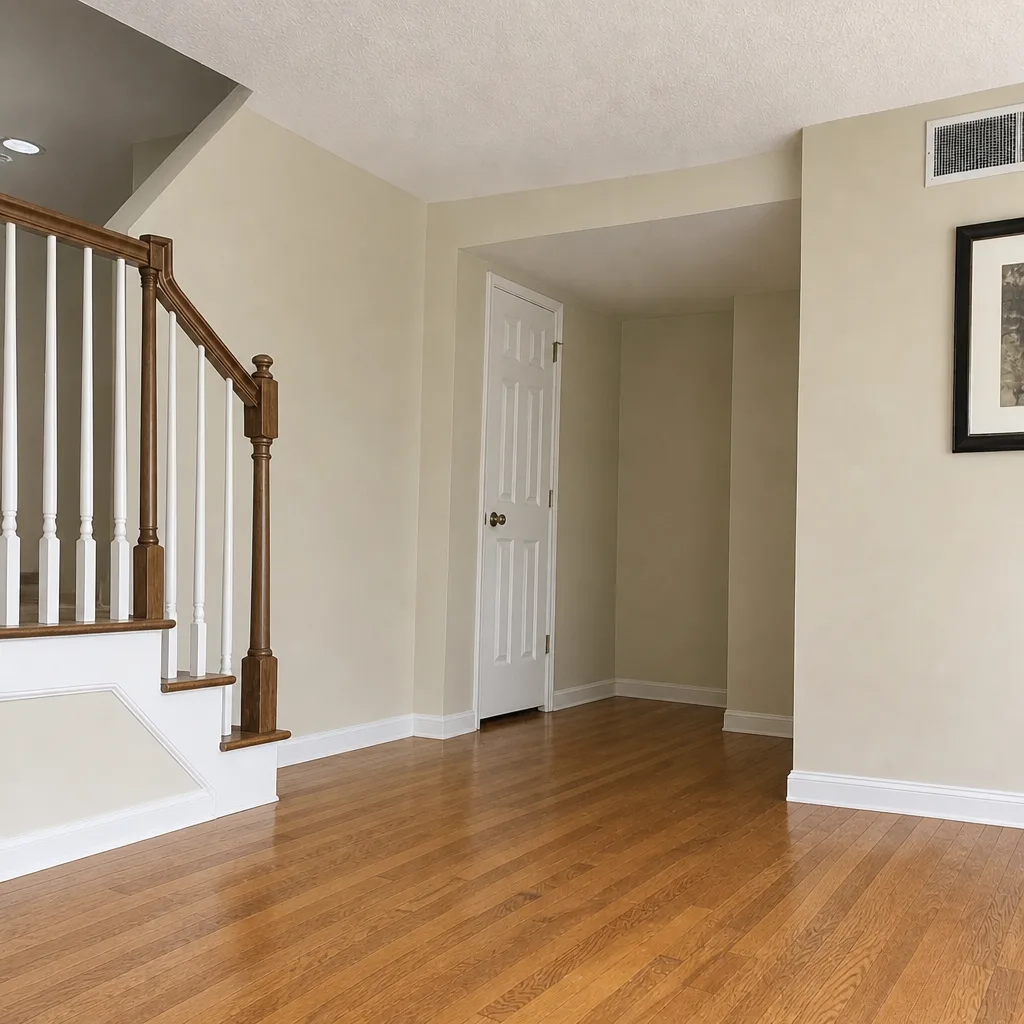 After
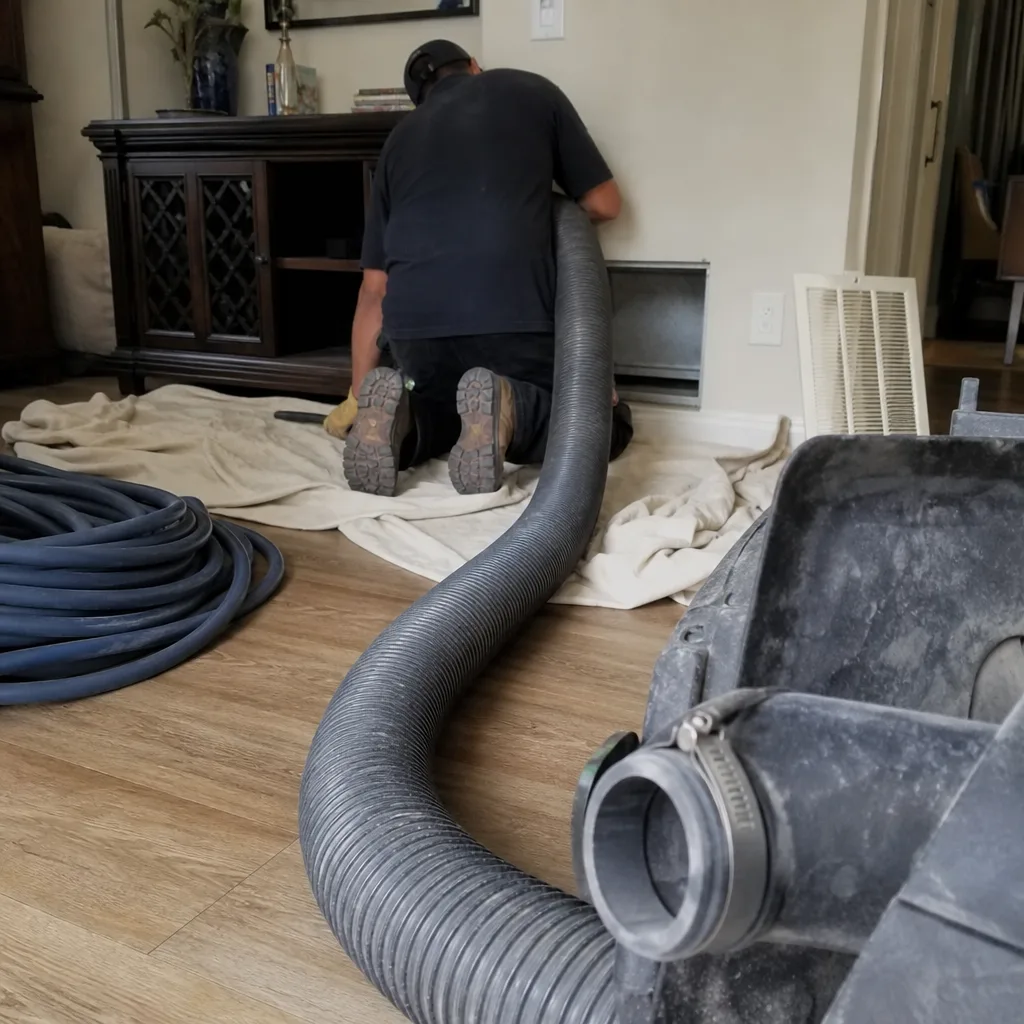 Before
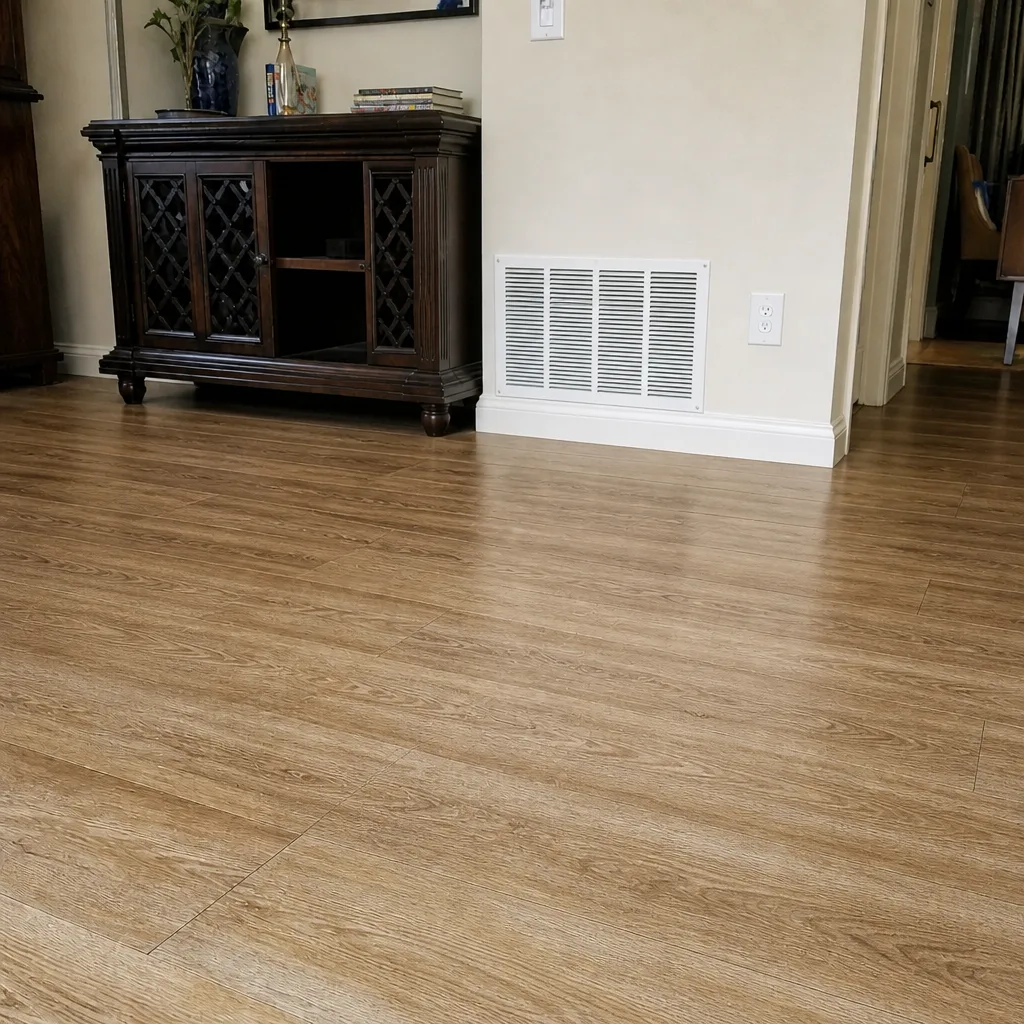 After
When to Call a Professional
Some situations clearly warrant a professional visit. Visible dust blowing from supply registers when the system kicks on is one. A musty smell that shows up whenever the HVAC runs is another, and it usually points to biological growth in the coil or plenum. Unexplained allergy symptoms that seem worse indoors, a return register with a visible dust layer, or a system that hasn’t been cleaned in several years all point to a full inspection. A dryer that takes noticeably longer to dry clothes, or a visible lint accumulation around the vent hood, calls for a dedicated dryer vent visit rather than a wait-and-see. If you’re buying a home in Laguna Hills and the inspection report flags the HVAC system, a pre-purchase cleaning gives you a baseline. Laguna Hills Air Duct Cleaning offers free estimates in Laguna Hills – call (888) 435-4470. We answer 24/7. Fast dispatch from 7am to 7pm, Sunday through Friday.
Frequently Asked Questions
Pricing depends on the size of the system, the number of runs, and whether the job includes sealing, sanitizing, or dryer vent work. Most whole-home jobs are quoted as a flat price per system after an inspection, and the written estimate sets the final cost. Call (888) 435-4470 for an exact quote – estimates are free.
Cheap quotes usually reflect cheaper equipment: less collection airflow, no HEPA filtration at the exhaust, no containment unit, and sometimes no rotary brush at all. The price gap isn’t service shortcutting – it’s capability. Ask the CFM question and you’ll usually see why the gap exists. Call (888) 435-4470 to talk through your system and get a fair number.
Ask for before-and-after photos of your own duct interior, not stock images. A contractor using a camera sees the same duct you’d see if you could crawl in, and a documented process shows you the difference. If a company won’t provide photos, that’s a signal worth acting on. Call (888) 435-4470 and ask what documentation the technician will leave with you.
Every two to three years is a reasonable default for most homes, though it depends on pets, recent renovation, and whether anyone in the house has allergies or respiratory sensitivity. Homes in dusty parts of Laguna Hills tend to need it closer to the two-year mark. A single inspection visit can tell you whether you’re due. Call (888) 435-4470 to book one – estimates are free.
No. NADCA certification indicates a company has committed to industry standards and, in many cases, passed a knowledge assessment, but it doesn’t verify the specific collection unit, CFM rating, brush system, or containment equipment on the truck. Pair the membership question with the equipment question and you’ll get a much more reliable read. Call (888) 435-4470 if you want to hear how we answer both.
Yes, dryer vent cleaning is a dedicated service that can be scheduled alongside duct cleaning, and it’s a separate job with its own equipment and its own safety treatment. A dryer vent clogged with lint is a fire waiting for a spark, which is why we handle it as a real service rather than an add-on. Call (888) 435-4470 to schedule both.
We serve homeowners, landlords, and property managers throughout Laguna Hills, including Nellie Gail Ranch, Moulton Ranch, and the neighborhoods around the Laguna Hills Mall and Aliso Creek. Our technicians have up to 12 years of experience with the local housing stock, from older single-story tract homes to newer multi-story builds with attic air handlers. Call (888) 435-4470 for a free estimate on your property.
The Bottom Line
The best air duct cleaning brand for your Laguna Hills home is the one that can describe its equipment in specifics: the collection vacuum’s CFM rating, the rotary brush system it uses, the containment setup for the work area, and the product behind its sanitizing step. Equipment reveals capability in a way no review score or franchise sign can. Pair a real equipment answer with a documented process – before-and-after photos of your own ducts – and a company offering cleaning through sealing and sanitizing under one roof, and you’ve got a strong filter for choosing the right contractor. Call (888) 435-4470 for a free estimate. We answer 24/7. Fast dispatch from 7am to 7pm, Sunday through Friday.
Written by the team at Laguna Hills Air Duct Cleaning.